
What if you could delete three layers of bulky fleece from your winter wardrobe and still feel like you're standing in front of a fireplace? We've all been there. You're waddling out the door looking like a marshmallow, yet you're still shivering by the time you reach the car. It's a common struggle. You want to stay warm, but you don't want to feel restricted or worry about your heated clothing battery dying halfway through your day. You might even worry about the safety of wearing electronics in the damp snow.
The good news is that modern thermal technology has evolved into a precision thermal management system. It's no longer just a gadget for tech enthusiasts. Today, it's a reliable solution for anyone who wants to reclaim their time outdoors. In this 2026 guide, we'll show you how these garments work and how to find the perfect gear for your lifestyle. We'll cover everything from safety certifications to how modern batteries can provide up to 10 hours of warmth. You'll discover how to build a streamlined winter wardrobe that keeps you toasty from dawn until dusk.
Key Takeaways
- Learn how ultra-thin carbon fiber heating panels have replaced bulky wires to offer warmth without restricting your movement.
- Discover whether a full-coverage jacket or a high-mobility vest is the right choice for your specific daily routine and environment.
- Master the difference between 5V and 7.4V battery systems to ensure your heated clothing provides the exact heat intensity you need.
- Gain peace of mind with a step-by-step guide on how to safely machine wash your gear without damaging the internal electronics.
- Protect your investment with simple off-season storage tips, including the 50% charge rule, to prevent common battery failures.
The Evolution of Warmth: How Modern Heated Clothing Works
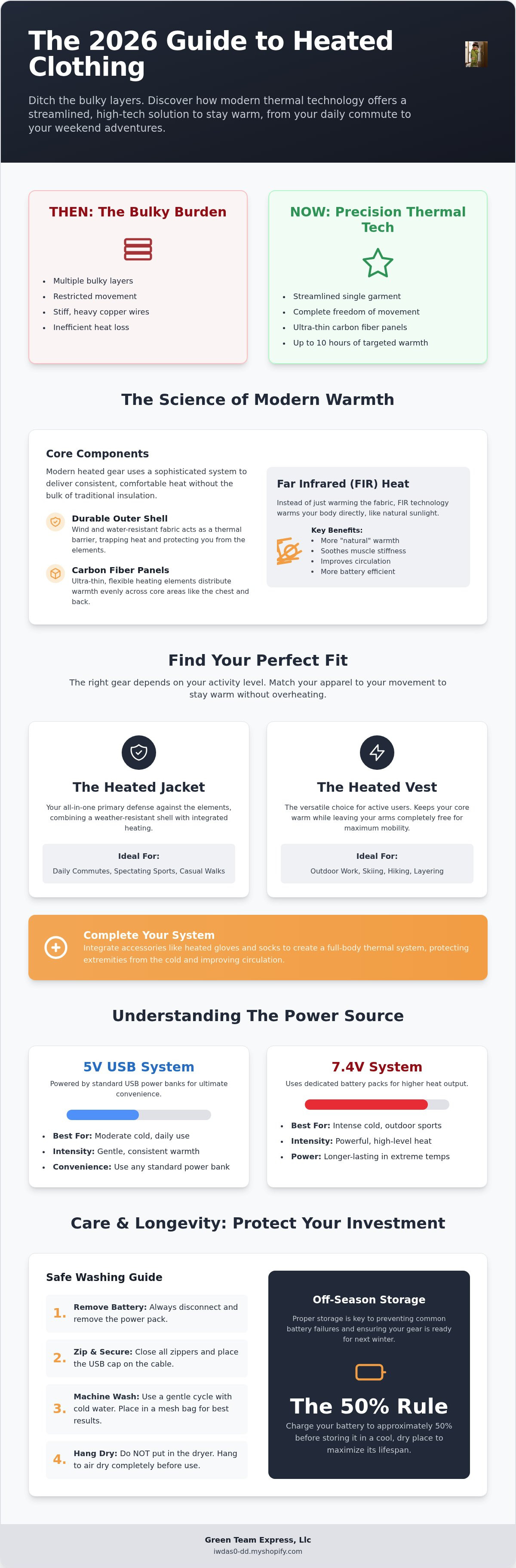
At its simplest, heated clothing is everyday apparel enhanced with integrated, battery-powered thermal elements. While the history of heated clothing reaches back to early military and aviation use, the 2026 landscape has completely transformed how we experience warmth. We've moved past the days of stiff, copper-wired vests that felt like wearing a heavy toaster. Today, the industry has embraced ultra-thin carbon fiber and graphene panels. These materials are so lightweight you'll likely forget they're even there until you click the power button.
The 2026 shift focuses on efficiency. Modern gear uses smart power management to ensure every milliamp of battery life goes toward keeping you comfortable. This isn't just about raw heat; it's about precision. By using advanced materials, manufacturers can now create garments that are indistinguishable from high-end fashion, yet capable of battling sub-zero temperatures at the touch of a button.
The Core Components: Elements, Wires, and Fabric
A modern heating zone is a sophisticated mesh designed to distribute warmth evenly across your back, chest, or pockets. Carbon fiber is the preferred choice for 2026 because it's incredibly flexible. You can fold it, crumple it, and run it through a standard wash cycle without snapping the connections. This durability is paired with an advanced outer shell. These shells act as a thermal barrier, trapping the 'active' heat generated by the panels and preventing it from escaping into the biting wind. The result is a streamlined system that provides consistent warmth without the bulk of traditional insulation.
Far Infrared Heat: Warming More Than Just Skin
One of the most significant breakthroughs in heated clothing is the shift toward Far Infrared (FIR) technology. Traditional heaters simply warm the air or the fabric touching your skin. FIR works differently. It emits light waves that penetrate deeper into your body, warming your muscles and tissues directly. This creates a more 'natural' feeling of heat, similar to standing in a patch of sunlight on a crisp afternoon. For those who struggle with muscle stiffness or poor circulation in the winter, FIR provides a therapeutic benefit that goes beyond basic comfort. It's efficient, too. By warming you from the inside out, the system requires less battery power to maintain a steady, comfortable temperature throughout your commute or outdoor adventure.
Heated Jackets, Vests, and More: Choosing Your Category
Finding the right piece of heated clothing depends entirely on what your day looks like. Are you standing on a frozen sideline for hours? Or are you hiking up a trail where you'll generate your own body heat? In 2026, the market has moved away from "one size fits all" solutions. Instead, we now have specialized gear designed for specific activity levels. Matching your apparel to your movement is the secret to staying warm without overheating.
The Heated Jacket: The All-In-One Solution
For most people, a heated jacket is the logical starting point. It's the most popular entry point because it serves as your primary defense against the elements. You get a windproof, water-resistant outer shell combined with those internal heating panels that protect your core. It's the ideal choice for daily commutes, spectating sports, or casual walks when you want a simple, standalone solution. Look for features like fleece-lined collars and adjustable cuffs to seal in the warmth. These jackets act as a mobile climate control system, allowing you to step out into the cold with total confidence.
Layering with Heated Vests and Accessories
Vests are the secret weapon for active users. They keep your core toasty while leaving your arms free to move. This is a game-changer if you're working outdoors, skiing, or even just clearing the driveway. A vest fits perfectly under a professional shell or even a hydration backpack vest during late-season trail runs. It's all about versatility. You can wear it as a mid-layer when the temperature drops or as an outer layer on those crisp, sunny afternoons.
Integrating accessories like heated socks and gloves can turn a good outfit into a full-body thermal system. Heated socks are particularly helpful for those dealing with Raynaud's symptoms or poor circulation. By focusing on your extremities, you prevent the "chilled to the bone" feeling that often ends an outdoor adventure early. This modular approach allows you to adapt as the weather changes. You can start with just the vest and add the accessories as the sun goes down.
Static activities like watching a game require more coverage and higher heat settings to maintain your temperature. In contrast, active pursuits benefit from the breathability and mobility of a vest. If you're ready to reclaim your winter, we recommend exploring our curated selection of high-utility heated gear to find your perfect match.
The Power Source: Understanding 5V vs. 7.4V Battery Systems
Voltage is often the most confusing part of buying your first piece of heated clothing. Think of voltage as the "intensity" behind your warmth. While a 5V system is like a steady, comforting glow, a 7.4V system is a powerful blast of heat designed to fight off the most aggressive winter winds. In 2026, choosing between these systems comes down to two things: how cold you'll get and how much convenience you need.
Safety is the non-negotiable foundation of these power sources. Modern Lithium-Ion batteries used in high-quality apparel must meet strict global standards like CE, RoHS, and FCC certifications. Additionally, look for UN 38.3 transportation safety testing. These certifications ensure your battery won't overheat or short circuit, even if you're caught in a sudden downpour. Today's technology operates on safe, low-voltage DC power, making it as safe to wear as the phone in your pocket.
5V USB Systems: Convenience and Versatility
The biggest perk of a 5V system is the universal USB connection. These garments are designed to work with the same portable power banks you already use for your phone. This makes them incredibly versatile for urban environments or mild winters. If your jacket battery runs low during a commute, you can simply swap it for your backup phone charger. While 5V systems are perfect for daily errands or walking the dog, they do have limits. They generally reach a lower peak temperature compared to higher voltage units. If you're looking for a lightweight, low-maintenance entry into thermal gear, this is your best bet.
7.4V and 12V Systems: Maximum Thermal Output
When the temperature drops well below freezing, you'll want the extra muscle of a 7.4V or 12V system. These are the gold standard for high-intensity activities like mountain work or winter motorcycle riding. Because they operate at a higher voltage, they can push more heat through the heating panels much faster. This is essential for maintaining your core temperature when you aren't moving enough to generate your own heat.
However, this power comes with a trade-off. These systems usually require proprietary batteries and specialized chargers. You can't just use a standard USB cable from your drawer. The batteries are often slightly larger to accommodate the higher capacity needed to run for 8 to 10 hours on a single charge. Managing that extra weight is easy if the garment has a well-positioned battery pocket, but it's something to consider if you prioritize a sleek feel. For those facing extreme sub-zero conditions, that specialized power is worth every extra ounce.
Safety and Durability: Can You Really Wash a Heated Jacket?
The idea of tossing a wired garment into a washing machine feels wrong. We've been taught that water and electricity don't mix. However, 2026 heated clothing is engineered specifically for this. Modern heating elements are encased in waterproof membranes. They're built to survive the agitation of a wash cycle just as well as your favorite hoodie. It's not just about surviving; it's about maintaining hygiene without compromising the tech.
The Washing Protocol: Protecting the Elements
Keeping your gear clean is simple if you follow a specific routine. This isn't just about saving the electronics; it's about protecting the fabric and fit. Following these steps ensures your jacket stays as warm as the day you bought it:
- Remove the battery: This is the only component that must stay dry at all times.
- Secure the cables: Tuck the internal power cord back into its designated pocket and zip it shut.
- Use a laundry bag: A mesh bag prevents the internal wiring from getting snagged or stretched by the machine's agitator.
- Gentle cycle only: Use cold water and mild detergent to avoid damaging the waterproof coatings.
Air drying is the gold standard for 2026 gear. While many elements can handle a low-heat tumble, hanging it up ensures the carbon fiber panels stay flat and functional for years. Avoid wringing the jacket out by hand. Let gravity do the work to preserve the internal structure.
Electrical Safety Standards
You don't need to worry about electrical shocks. These systems operate on low-voltage DC power, typically between 5V and 12V. That's roughly the same as a standard phone charger. It's physically impossible for this level of voltage to cause a dangerous shock, even if you're caught in a torrential rainstorm. Most 2026 models also feature intelligent safety sensors. If the system detects a short or an unusual temperature spike, it triggers an automatic shut-off instantly.
Look for batteries with UL or FCC certifications to ensure the protective circuitry is top-tier. These garments are tested to withstand 50 or more wash cycles before the heating performance even begins to dip. This durability makes them a long-term investment in your winter comfort. If you're ready to upgrade your winter gear, explore our collection of durable heated jackets and experience worry-free warmth.
Maximizing Longevity: Maintenance and Off-Season Care
It might surprise you, but the most dangerous time for your heated clothing isn't the middle of a blizzard. It's actually the summer. Most battery failures happen when gear is tossed into a hot attic or a damp basement and forgotten until the first frost. Lithium-Ion batteries are specialized tools that require a little bit of attention during their "hibernation" period. If you treat them right, your gear will be ready to perform the moment the temperature drops.
The golden rule for long-term storage is the 50% charge rule. Never store your battery completely drained or fully charged at 100%. Storing a battery at 0% can lead to a "deep discharge" state, which might prevent it from ever holding a charge again. Conversely, keeping it at 100% for months puts unnecessary stress on the cells. Aim for that middle ground. It keeps the chemistry stable and ensures the battery remains healthy for years to come.
Summer Storage Checklist
Proper storage is about more than just the battery. You also need to protect the internal heating panels we discussed earlier. Follow these simple steps to ensure your gear stays in peak condition:
- Avoid tight folding: Don't cram your jacket into a small storage bin. This can crimp the internal carbon fiber filaments. Instead, hang it on a wide, padded hanger or fold it loosely.
- Control the climate: Store your gear in a cool, dry place. High humidity can lead to oxidation on the connection ports, while extreme heat degrades battery life.
- Set a quarterly reminder: Put a note on your calendar to check the battery charge every three months. If it has dipped below 25%, give it a quick top-off back to that 50% sweet spot.
Troubleshooting Common Issues
If your jacket won't turn on after a long break, don't panic. Start by inspecting the connection port inside the battery pocket. Over time, these ports can collect pocket lint or debris that prevents a solid electrical connection. A quick blast of compressed air or a gentle clean with a wooden toothpick often solves the problem. You should also run your hands over the heating zones to feel for any "crunchy" textures or unusually hot spots, which could indicate a damaged element.
Remember that batteries naturally have a shorter lifespan than the fabric of the jacket itself. If your garment is in great shape but the runtime has dropped significantly, you can usually just replace the battery rather than the entire piece. However, if the outer shell is losing its water resistance or the elements feel compromised, it's time for an upgrade. Ready to upgrade your winter? Explore our latest heated jacket collection to find a fresh, high-utility solution for the upcoming season.
Step Into the Future of Winter Comfort
Winter doesn't have to be a season of shivering and heavy layers. By embracing heated clothing, you're choosing a precision thermal system that adapts to your lifestyle. We've explored how durable carbon fiber elements and Far Infrared heat provide deep, natural warmth without the bulk. You now know that 2026 safety-certified battery technology makes these garments as reliable as they are comfortable, even through dozens of wash cycles.
Whether you're commuting through a city or working in sub-zero mountains, the right gear keeps you moving. It's time to reclaim your time outdoors and enjoy the season on your own terms. Explore our curated selection of high-performance heated gear and find your perfect winter companion today. We offer national shipping across the United States, so warm, worry-free adventures are just a few clicks away. Don't let the cold hold you back this year.
Common Questions About Heated Gear
Is heated clothing safe to wear in heavy rain or snow?
Yes, it's completely safe. Modern heated clothing uses waterproof membranes to encase the heating elements. Because the system operates on low-voltage DC power, there's no risk of a dangerous electrical shock even if the fabric gets soaked. Just make sure your battery connection is zipped securely in its water-resistant pocket. You can confidently shovel snow or walk through a downpour without worrying about the electronics.
How long does the battery typically last on a single charge?
Most batteries in 2026 provide about 8 to 10 hours of continuous warmth on a single charge. This duration depends heavily on your chosen heat setting. On the highest level, you might get 3 to 4 hours of intense heat, while the lowest setting can stretch the life to nearly 20 hours. It's always a good idea to carry a spare battery if you plan on being outdoors for an entire day.
Can I wear a heated jacket if I have a pacemaker?
You should always consult your physician before wearing electronic apparel if you have a pacemaker. While the low-voltage elements and batteries produce very little electromagnetic interference, medical professionals recommend caution. Every medical device is different, so getting a personalized approval from your doctor ensures you can enjoy the warmth without any unnecessary health risks or concerns about device interference.
Are heated jackets allowed on airplanes and in checked luggage?
You can bring your gear on a plane, but there's a specific rule for the batteries. Lithium-ion batteries must be kept in your carry-on luggage at all times. Never put them in checked bags due to FAA and TSA fire safety regulations. The jacket itself can be worn or packed anywhere, but the power bank must stay with you in the cabin during the flight.
Do heated jackets feel heavy or bulky compared to normal coats?
Modern designs are surprisingly lightweight. The heating panels are made of carbon fiber, which is as thin as a piece of thread. This means a heated jacket feels almost identical to a standard winter coat in terms of thickness. The only noticeable difference is the small battery tucked into an internal pocket. You won't feel restricted or weighed down while walking, commuting, or participating in outdoor sports.
Can I use any power bank with my 5V heated clothing?
Yes, most 5V garments are designed to be universal. You can typically use any high-quality power bank that fits a standard USB port. Just check that the battery provides at least 2.1A of output to ensure the heated clothing reaches its intended temperature. This versatility is great because it lets you use the same backup battery for your phone and your jacket during a long commute.
Does the heating element lose its effectiveness over time?
The heating elements themselves are incredibly durable and don't "wear out" like a lightbulb. Carbon fiber is designed to handle the movement of your body and 50 or more wash cycles without losing performance. If you notice a drop in warmth over several years, it's usually the battery losing its capacity rather than the elements failing. Replacing the battery usually restores the garment to its original power level.
Is it safe for children or the elderly to wear heated gear?
It's safe, but supervision is important. Children and some elderly individuals might not be able to sense if the jacket is getting too hot or might struggle to adjust the controls manually. It's best to use the lower heat settings and check in frequently. For those with sensitive skin or reduced heat sensitivity, we recommend wearing a thin base layer under the heated garment for added protection.