
What if your next long-distance run or hike didn't involve a heavy, bouncing backpack hitting your spine with every step? Many beginners assume a standard pack is fine for the trail, but the reality is often a cycle of painful chafing and that rhythmic sloshing sound that ruins the peace of the outdoors. Finding the right hydration backpack vest is the secret to moving faster and feeling lighter. It is about turning a necessary chore into a seamless part of your movement.
We know the frustration of water that tastes like a shower curtain or the struggle of trying to scrub out a moldy bladder after a weekend trip. You want to stay cool during those sweltering summer climbs while keeping your phone and snacks within reach. This guide is your shortcut to effortless hydration. We will show you how to choose a vest that eliminates the bounce, prevents the plastic taste, and stays comfortable for miles.
From maintenance tips to sizing secrets, we have curated everything you need to know to gear up for success. Whether you're pairing your vest with a heated jacket for a crisp autumn trek or pushing through a July heatwave, the right gear makes the difference. Let's look at the best options for 2026 and get you ready for your next big discovery.
Key Takeaways
- Learn why a high-ride fit is the essential secret to eliminating painful bounce and friction while you move.
- Discover how to choose the perfect hydration backpack vest capacity for your needs, whether you're on a quick sprint or an all-day trek.
- Get the breakdown on high-quality materials like BPA-free TPU and how they ensure your water stays fresh and plastic-free.
- Master the simple three-step cleaning routine that'll keep your gear in top shape for years using basic pantry staples.
- Explore how finding the right specialized gear can turn a challenging new hobby into a comfortable and rewarding adventure.
Why a Hydration Backpack Vest is Essential for Modern Adventures
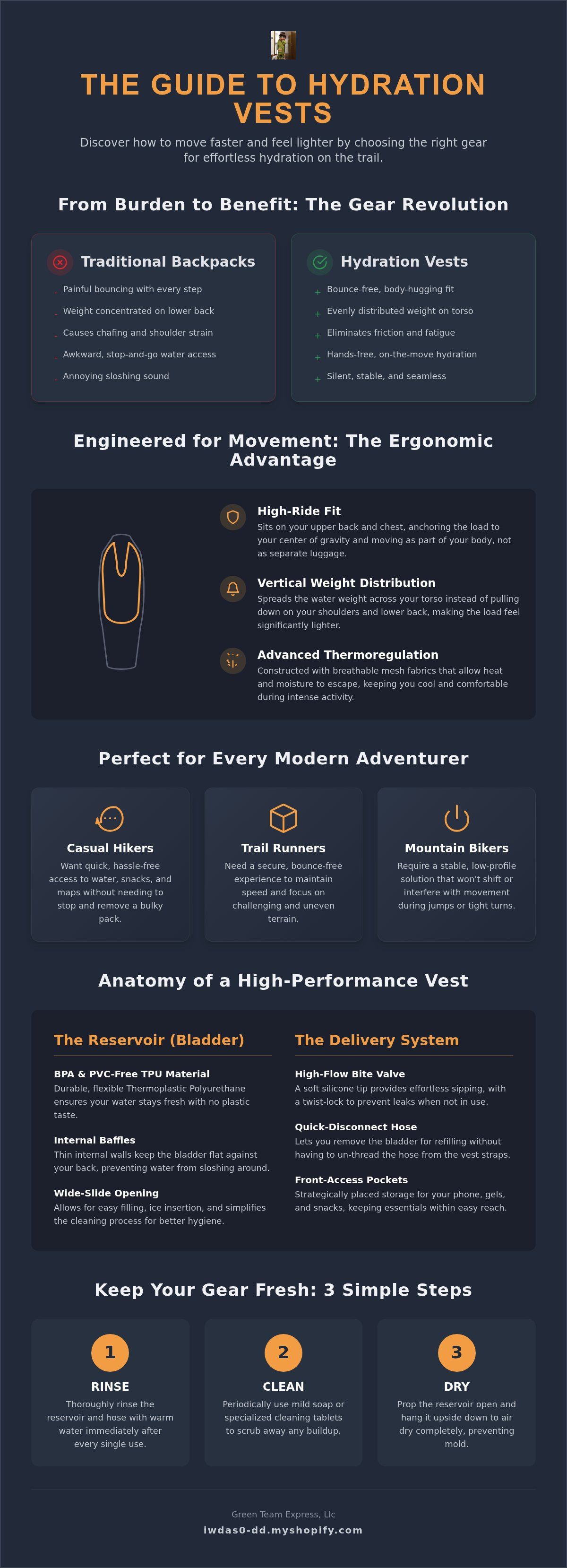
Think of a hydration backpack vest as a piece of clothing rather than a piece of luggage. Traditional backpacks are designed to carry loads on your hips and lower back. They often sag, swing, and pull at your shoulders. A vest, however, is a specialized wearable gear system. It wraps around your torso to distribute water weight evenly across your chest and upper back. This high-ride fit is the secret to a better outdoor experience. It turns a heavy burden into a balanced part of your body.
For many beginners, the biggest hurdle is the "stop-and-start" nature of traditional hiking. Reaching for a water bottle in a side pocket usually requires stopping or awkward twisting. This breaks your physical rhythm and mental focus. The hands-free advantage of a vest changes that. By using a tube and bite valve, you can sip water while keeping your eyes on the trail. It's about maintaining your flow. You stay hydrated without ever having to break your stride.
A Hydration pack integrated into a vest also solves the issue of lower back pain. Standard packs often create a "pendulum effect" where the weight shifts side-to-side with every step. Vests anchor the weight close to your center of gravity. This reduces muscle fatigue and prevents the friction that causes painful chafing during long summer activities. Choosing a high-quality hydration backpack vest is a simple way to upgrade your year-round adventure kit and protect your body from unnecessary strain.
The Ergonomics of Movement
Vertical weight distribution is the core of vest design. Instead of all the weight pulling down, it is spread across a larger surface area. This makes the load feel significantly lighter. Modern vests also use breathable mesh materials. These fabrics are essential for thermoregulation. They allow heat to escape from your body. This keeps you cool even when the sun is at its peak. By hugging the body tightly, the vest eliminates the bouncing sensation that makes traditional bags so distracting during a fast-paced move.
Who is a Hydration Vest For?
- Trail Runners: Those who need a bounce-free experience to maintain speed on uneven terrain.
- Casual Hikers: People who want quick access to snacks, maps, and water without taking off their pack.
- Mountain Bikers: Riders who require a low-profile solution that won't shift during jumps or tight turns.
Whether you're trying a new hobby or upgrading your current kit, this piece of gear is a game changer. It's a unique lifestyle solution that makes the miles feel shorter and the journey more enjoyable.
Anatomy of a Vest: Bladders, Bite Valves, and Storage
Understanding the tech inside your hydration backpack vest makes a massive difference in your comfort. It isn't just about carrying water. It's about how that water behaves while you move across technical terrain. A well-designed vest feels like a second skin, while a poorly made one feels like a loose chore. Let's look at the components that separate a quality find from a frustrating one.
The Hydration Reservoir Explained
The heart of the system is the reservoir, often called the bladder. High-quality reservoirs use TPU (Thermoplastic Polyurethane) materials. These are durable, flexible, and withstand the pressure of being squeezed against your back. Always verify that your bladder is BPA-free and PVC-free. This ensures your water stays fresh and avoids the unpleasant plastic taste that ruins many outdoor trips.
Internal baffles are a hidden but essential feature. These are thin walls inside the bladder that prevent water from pooling at the bottom. They keep the bladder flat against your back, which stops the annoying sloshing sound and keeps the weight centered. When it's time for maintenance, choosing a wide-slide opening makes it much easier to reach inside. If you're worried about hygiene, learning how to clean a hydration bladder properly will extend the life of your gear by years.
The hose should feature a high-flow bite valve. A simple twist-lock prevents leaks in your car, while a soft silicone tip makes drinking effortless. Quick-disconnect hoses are another "pro" feature. They let you leave the hose threaded through the vest while you take the bladder to the sink for a refill. It's a small detail that saves a lot of time.
Front-Access Pocket Strategy
Efficiency is the goal for any modern adventurer. You shouldn't have to take off your vest to find your phone or a snack. This is where front-access pockets come into play. Most vests use a mix of pocket types to help you stay organized on the move.
- Zippered Pockets: These are best for valuables like keys, credit cards, or your phone. Many vests include an integrated whistle near the zipper for added safety.
- Stretch-Mesh Pockets: These are perfect for quick-grab items like energy gels, bars, or a light pair of gloves. The mesh expands to fit odd shapes while keeping them snug against your chest.
- Adjustment Straps: Look for "set-it-and-forget-it" side cinches. These allow you to tighten the vest as the water level drops. It keeps everything snug without restricting your breathing.
Small details like key clips and media ports for headphones add to the overall utility of the gear. If you're looking for a well-designed hydration backpack vest with these exact features, exploring our curated selection is a great way to start your next journey with confidence.
Choosing the Right Fit: Running Vests vs. Hiking Hydration Packs
Choosing a hydration backpack vest isn't a one-size-fits-all decision. The gear you need for a quick morning jog is very different from what you'll carry on an all-day mountain trek. Understanding these differences helps you avoid buying a pack that feels like overkill or one that leaves you short on supplies. It's about matching the tool to the adventure.
Experts agree that staying topped up on fluids is essential for staying hydrated during any physical exertion. For runners, this usually means a minimalist approach. A 2L capacity is often plenty for short to medium distances in a hydration backpack vest. These models use ultra-lightweight fabrics designed to breathe and move with you. They should fit like a second skin to prevent any friction or rubbing during high-intensity movement.
The Running Vest Profile
Speed and stability are the priorities here. Running vests often feature soft flask compatibility in the front pockets. This allows for easy electrolyte management alongside your main water supply. Compression systems are also vital. They keep the load stable as the bladder empties, preventing that annoying flopping sensation. You want a pack that feels invisible while you're pushing for a personal best.
The Hiking and Multi-Sport Pack
When your adventures stretch into a full day, you need more than just water. Hiking packs often jump to 10L or more in total volume. They use durable ripstop materials to handle scrapes against branches or rocks. These packs include extra storage for first aid kits, tools, and extra layers. Look for attachment points for trekking poles or helmets if you enjoy technical trails. They prioritize comfort and cargo over pure weight savings.
Your vest should be a year-round companion. In colder months, you'll need to layer up to stay safe. A well-designed vest has enough adjustment in the side straps to fit comfortably over a heated jacket. This flexibility ensures you don't have to change your hydration habits just because the temperature drops. It's about finding that perfect balance between utility and comfort for every season.
Maintenance and Care: Keeping Your Hydration System Fresh
A clean system is the difference between a refreshing sip and a swampy disaster. Many beginners invest in a hydration backpack vest only to let it develop a funky smell after a few months. It doesn't have to be that way. Proper care is the secret to making your gear last for years. Immediate rinsing after every use is the single most important habit you can build. Even if you only used water, moisture trapped inside a dark bladder is a playground for bacteria.
When your gear needs more than a quick rinse, use the three-step deep clean. First, fill the bladder with warm water and a squeeze of lemon juice or a tablespoon of baking soda. These natural cleaners break down residues without leaving a chemical scent. Second, let it soak for at least 30 minutes. Finally, scrub the interior with a soft brush and rinse thoroughly. If you prefer a hands-off approach, specialized cleaning tablets are a great alternative for a deep, effervescent scrub.
Drying is where most people fail. If the bladder walls stick together while wet, they won't dry properly. Use a kitchen whisk or a dedicated drying hanger to keep the reservoir propped open. Always inspect the bite valve for tiny tears or grit. A small piece of sand can prevent the valve from sealing, leading to a slow, annoying leak down your chest during your move.
The Step-by-Step Cleaning Process
Biofilm often hides in the hose where brushes can't reach easily. Use a long, flexible tube brush to flush out the entire length of the line. This prevents the "cloudy" look that develops over time. If you just bought a new hydration backpack vest, you might notice a slight plastic taste. Rinsing the reservoir with a mix of lemon juice and water usually eliminates this immediately. For safe storage between adventures, many experienced users keep their empty, bone-dry bladders in the freezer. The cold environment prevents any potential mold growth from starting.
Extending the Life of the Vest Fabric
The vest itself requires a different touch. The breathable mesh is delicate and can snag in a standard washing machine. Hand-washing in a sink with mild soap is always the safest bet. If you must use a machine, place the vest in a mesh laundry bag and use the most gentle cycle available. Air-drying is mandatory. Never put your vest in a dryer, as high heat can damage the elastic fibers and heat-sealed seams. Hang it in a shaded area. Direct sunlight causes UV damage that makes the fabric brittle over time. Finally, if you've been out in dusty or salty environments, a tiny bit of zipper lubricant will keep the tracks moving smoothly. If you are ready for a fresh start with high-quality gear, check out our latest hydration backpack vest options designed for easy maintenance.
Find Your Flow: Why Our Curated Hydration Solutions Lead the Way
At Green Team Express, Llc, we believe that the best gear shouldn't just exist; it should solve a problem you didn't know you could fix. Finding the perfect hydration backpack vest is often a journey of trial and error. We've done the hard work of searching for items that balance professional reliability with a sense of wonder. Our goal is to make every outdoor adventure accessible, whether you're a seasoned athlete or a weekend warrior trying a brand new hobby. We act as a friendly guide through the digital marketplace, bringing you high-utility finds that we truly believe in.
We see gear as a tool for active improvement and daily necessity. Just as our basketball return system helps you master your shot through repetition and ease, a well-chosen vest helps you master the trail. It's about removing the friction from your activities so you can focus on the joy of the move. We prioritize the discovery of unique solutions because we know that the right accessory can turn a difficult day into a successful milestone. It is about finding those special items that make your routine feel like an adventure.
Versatility for Every Season
A great vest isn't just for the summer heat. It is a core part of a year-round adventure kit that adapts to your environment. You can easily transition from a July trail run to a snowy January hike by adjusting the fit over your winter layers. By pairing your hydration backpack vest with specialized apparel like heated clothing, you stay comfortable regardless of the forecast. It’s this focus on unique, functional accessories that sets our curated collection apart from the cold, corporate alternatives.
We act as a bridge between the manufacturer and the consumer, emphasizing a personal touch in a digital marketplace.
Join the Community
We love hearing about your milestones and the new places your gear has taken you. Whether it’s your first five-mile hike or a personal best on the local track, your progress inspires our future curation. Our Shopify platform makes it easy to browse these hand-picked solutions with confidence and security. We provide a low-friction shopping experience so you can spend less time scrolling through endless specs and more time exploring the world. We value practicality and a sense of wonder in every product we offer. Ready to find your flow? Explore our current collection today and discover the piece of gear that changes everything.
Ready for Your Next Big Discovery?
Choosing the right hydration backpack vest is the first step toward a more comfortable and focused outdoor experience. By prioritizing a high-ride fit and understanding the anatomy of your reservoir, you eliminate the distractions of bouncing gear and poor hydration. Proper maintenance keeps your system fresh for years, making every mile as refreshing as the first. Our team has done the hard work of finding high-utility gear that solves real problems so you don't have to.
We invite you to explore our curated selection of hydration backpack vests today. Every item in our shop is chosen for its novelty and practicality, ensuring you get a unique solution for your active lifestyle. With our secure Shopify checkout and reliable national US shipping, getting the right gear is simple and stress-free. Whether you're training for a marathon or enjoying a quiet weekend trail, the right vest is a bridge to your next great milestone. It's time to find your flow and move with confidence.
Frequently Asked Questions
How tight should a hydration backpack vest be?
A hydration backpack vest should fit snugly against your body without restricting your breathing. It should feel like a second skin that doesn't bounce when you move. Most vests feature adjustable chest and side straps to help you find that perfect balance. If you can slide two fingers under the straps comfortably, you have the right fit. A loose vest causes painful chafing, while a tight one can limit your lung capacity.
Can I put electrolytes or sports drinks in the hydration bladder?
You can put electrolytes in your bladder, but it requires much more frequent and deep cleaning. Sugary drinks are a playground for mold and bacteria if even a tiny residue remains. Many adventurers prefer to keep plain water in the main reservoir and use the front stretch pockets for small flasks containing sports drinks. This strategy keeps your system fresh and extends the life of the bladder material.
Is a hydration vest better than a handheld water bottle for running?
A vest is generally superior for longer runs because it offers hands-free convenience and better weight distribution. Handheld bottles can lead to muscle imbalances or hand fatigue over several miles. With a hydration backpack vest, you maintain a natural arm swing and have extra storage for your phone and snacks. It's a more stable solution that allows you to focus on your pace rather than gripping a bottle.
What size hydration bladder do I need for a 3-hour hike?
For a typical three-hour hike, a 1.5L to 2L bladder is usually the ideal size for most beginners. This capacity provides enough water for moderate exertion without adding unnecessary weight to your torso. If you're hiking in extreme summer heat or on very steep terrain, you might want to lean toward a 2L reservoir. Always check your route for refill points, but carrying two liters is a safe baseline for a half-day adventure.
How do I stop the water from sloshing in my hydration pack?
Stopping the slosh is easy if you remove the air from the bladder before you start your move. After filling the reservoir, turn it upside down and suck the air out through the bite valve until you reach the water. Without air inside, the water cannot move around and create that rhythmic sloshing sound. This simple trick also keeps the weight more stable against your back, preventing the annoying pendulum effect.
Can I wear a hydration vest over a winter coat or heated jacket?
Yes, you can wear a hydration vest over a winter coat or a heated jacket as long as the vest has adjustable side cinches. This versatility is essential for year-round adventures where temperatures can shift quickly. Simply loosen the straps to accommodate the extra insulation of your heated clothing. This setup ensures you stay hydrated while wearing your hydration backpack vest during cold-weather treks, maintaining the warmth needed for winter sports.
Are hydration vests waterproof or water-resistant?
Most hydration vests are water-resistant rather than fully waterproof. They are typically made from lightweight, breathable mesh and treated fabrics that shed light rain or sweat. While they protect your gear from a quick drizzle, they won't keep items dry during a heavy downpour or a fall into a stream. For electronics, it's a good idea to use the internal zippered pockets or a small dry bag for total peace of mind.
How do I get the plastic taste out of a new hydration bladder?
To remove the plastic taste, rinse your new bladder with a mixture of warm water and lemon juice or baking soda. Let the solution soak for about 30 minutes before rinsing it thoroughly with fresh water. This natural cleaning method breaks down the manufacturing residues that cause the new bladder smell. It's a quick and effective way to ensure your water tastes crisp and clean from your very first outing with your new gear.