
You'll never reach elite shooting percentages if you spend half your practice time jogging after a ball that bounced into the corner. It's the hidden thief of progress. Every time you leave your spot to retrieve a missed shot, your rhythm disappears and your focus breaks. We've all been there; it feels more like a game of tag than a serious training session. It's exhausting, and it's simply not the way to build the muscle memory required for clutch moments.
The right indoor basketball shooting trainer transforms these scattered sessions into high-intensity, professional-grade workouts. It's about working smarter, not just harder. We're here to help you navigate the best options available in 2026, whether you need a specialized Portable Mini Basketball Return Game for smaller spaces or a heavy-duty system like the $499.99 Dr. Dish iC3. This guide will walk you through selecting the right gear, setting it up correctly, and mastering the drills that double your shot volume. You'll learn how to create an elite home environment where the only thing you have to focus on is the bottom of the net.
Key Takeaways
- Eliminate the frustration of chasing missed shots to keep your focus entirely on your shooting form and rhythm.
- Select an indoor basketball shooting trainer that matches your hoop type to avoid excessive noise and vibration during home sessions.
- Master the "dry fit" installation method to guarantee your ball returns smoothly and accurately every single time.
- Transition from casual shooting to elite training by using high-repetition drills specifically designed for solo practice.
- Discover how simple rim-mounted ramps or floor-standing nets can turn any standard room into a high-performance training environment.
What is an Indoor Basketball Shooting Trainer and Why You Need One
An indoor basketball shooting trainer is a functional tool designed to solve the most annoying part of solo practice: the chase. Whether it's a simple plastic ramp or a more complex netting system, these devices attach to your hoop to redirect the ball back to your hands. In a small room or a basement, every missed shot is a potential hazard for your furniture or electronics. By using a trainer, you create a controlled loop that keeps the ball exactly where it belongs. It turns a frustrating game of retrieval into a streamlined training session.
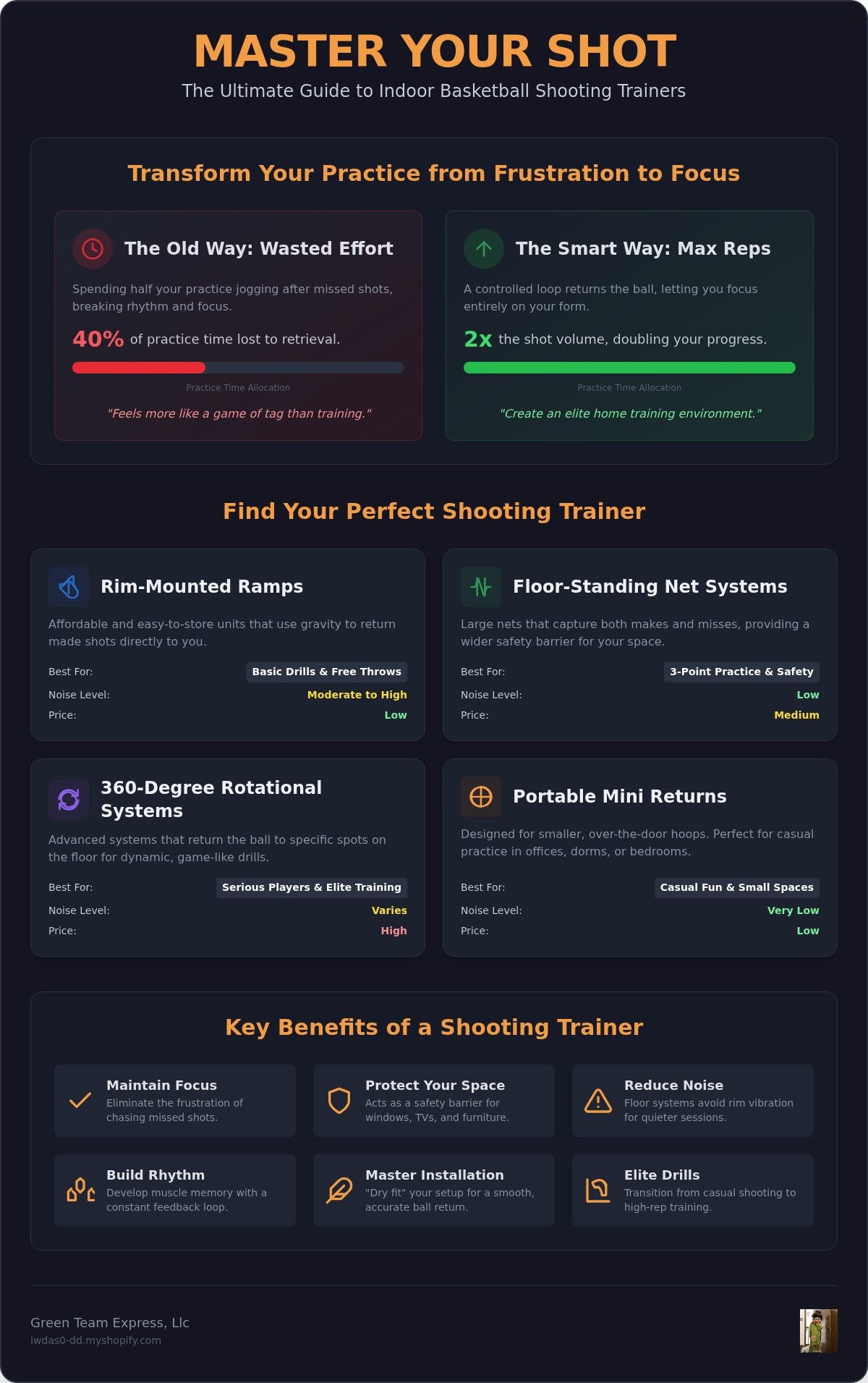
Think about the math of a typical practice. Without a return, you might spend forty percent of your time jogging to the corner of the room. That's time you aren't spending on your form. High-end professional programs use an automated basketball shooting machine to get thousands of reps, but you can achieve a similar rhythm at home with a manual system. Frequent, repetitive shots are the only way to build the muscle memory needed for a consistent release. When you double your repetitions, you're essentially doubling the speed of your progress.
The Science of Shooting Rhythm
Catching and shooting in one fluid motion is a specific skill that requires timing. When the ball returns to you immediately, you can practice your footwork and hand placement without resetting your brain every time you walk across the floor. It mimics the presence of a dedicated rebounder or coach. This constant feedback loop helps you stay in the zone. Your focus remains entirely on the arc of the ball rather than the logistics of the room. It's about building a psychological flow where the hoop and the shooter become one synchronized unit.
Key Components of an Indoor Return
A quality return system relies on a few simple parts to keep your practice efficient and your home safe. These components work together to handle the impact of every shot.
- The Ramp: This is the angled surface that uses gravity to roll the ball back toward your chest or feet.
- The Rim Attachment: Most home units, like a Portable Mini Basketball Return Game, use secure clips or straps to stay level during high-impact shots.
- Guard Nets: These wider nets catch the airballs or rim-clankers that would otherwise head toward a window or a TV.
Beyond the skill benefits, there's a practical side to indoor training. A stray basketball can do a lot of damage to a home office or a bedroom. Using an indoor basketball shooting trainer acts as a safety barrier. It keeps the ball in a predictable path, ensuring your practice doesn't end with a trip to the hardware store for a new window pane. It's a simple solution that protects your property while you sharpen your skills.
Understanding the Main Types of Basketball Returns
Choosing an indoor basketball shooting trainer isn't a one-size-fits-all decision. Your choice depends on your ceiling height, floor space, and how much noise your neighbors can tolerate. There are four main categories to consider. Each offers a different balance between price and performance. Finding the right fit ensures your practice feels like a professional workout rather than a chore.
- Rim-Mounted Ramps: These are the workhorses for basic drills. They're affordable and easy to store. They use gravity to send the ball back to you after a make.
- Floor-Standing Net Systems: These capture more than just makes. They're great for three-point practice where the ball might fly wide. Specialized machines can even deliver up to 1,000 reps per hour.
- 360-Degree Rotational Systems: These are for serious players who need the ball returned to specific spots on the court. Some are manual, while others use AI-powered analytics.
- Portable Mini Basketball Return Games: This is the newest trend. They're designed for smaller hoops and casual indoor spaces like offices or bedrooms.
Rim-Mounted vs. Net-Based Systems
Mounting hardware directly to your rim is the fastest way to get started. It's perfect for free throws and straight-on shooting. However, these units can cause extra vibration and noise. If you're practicing in a shared living space, the rattle against the backboard might be an issue. Floor-standing units are often quieter because they aren't physically rattling the hoop assembly. They also provide a wider safety net for your property, catching missed shots before they hit a wall or a lamp.
The Rise of Portable and Mini Returns
Not everyone has a full-sized gym in their basement. Mini systems are perfect for quick skill breaks during a busy day. They focus on hand-eye coordination and the "touch" required for a soft release. These units are incredibly easy to store and transport. You can set them up for a twenty-minute session and fold them away when you need the room for something else. If you're looking for a low-friction way to start, a Portable Mini Basketball Return Game is a fantastic entry-level choice. It fits right into a daily routine without requiring a massive renovation. It's a unique solution that solves the common problem of limited practice space.
How to Choose the Right Shooting Trainer for Your Space
Selecting the right indoor basketball shooting trainer depends entirely on your existing setup. You first need to check compatibility with your hoop. Door-mount hoops are popular for bedrooms, but they require lightweight trainers that won't strain the door frame or cause the door to swing open. If you have a wall-mounted or floor-standing unit, you can opt for sturdier, rim-mounted ramps. Always measure your floor space before buying. A floor-standing net system might look great in a photo, but it can quickly overwhelm a small basement or a shared home office.
Backboard materials also play a huge role in your choice. Acrylic and polycarbonate backboards are common for indoor play, but they vibrate differently under impact. A trainer that's too heavy can create a loud, rhythmic thud that echoes through the house. If you're practicing in an apartment or a house with roommates, look for systems that prioritize noise reduction. This ensures your late-night shooting sessions don't result in a knock on the door from a frustrated neighbor.
Skill level is the final piece of the puzzle. A beginner might only need a simple guard net to catch airballs and keep the room safe. As you progress, you'll want a 180-degree ramp that allows you to practice shots from different angles. Advanced players often look for systems that can return the ball to the wings or the corner, forcing them to move and reset their feet between every repetition.
Evaluating Durability and Materials
Polycarbonate is the gold standard for indoor training gear. It's tough enough to handle thousands of shots without cracking or warping. While plastic models are lighter and easier to move, they might not last as long under heavy, daily use. Look for non-marking hardware, especially on door-mount systems. Padded clips and rubberized contact points protect your paint and wood from scuffs. Quiet-return materials, like mesh netting or high-density foam, are also worth the investment for shared living spaces.
Budget vs. Performance for Indoor Play
Your training goals should dictate your investment level. Entry-level solutions, like a Portable Mini Basketball Return Game, are perfect for casual play and developing a soft touch. These are accessible and easy to store when not in use. Mid-range systems, such as the Dr. Dish iC3 priced at $499.99, provide a more professional feel for high school athletes who need consistent repetitions. If you have a dedicated home gym, high-end machines like the GRIND Basketball Machine, which is currently priced at $1,995 on sale, offer automated passing. These top-tier units are excellent for high-volume work but require a larger budget and a permanent space.
Step-by-Step: Setting Up Your Basketball Return for Success
Setting up your indoor basketball shooting trainer correctly is the difference between a smooth training session and a frustrating afternoon of adjustments. Start with a quick safety check. If you're using a door-mount hoop, verify that the hinges are secure. Adding the weight of a return system can shift the center of gravity of the hoop assembly. Ensure your backboard is firmly seated against the door or wall. This prevents the annoying rattle that can distract you from your shooting form.
The "Dry Fit" is a step many players skip, but it's essential for a professional feel. Hold your ramp or net assembly up to the rim before you tighten any straps or bolts. You want to see exactly where the ball will land after it passes through the net. If the ramp is too far forward, the ball will hit the edge and bounce away. Once you've found the perfect alignment, tighten the hardware just enough to stay secure without damaging the rim.
Aim for the "sweet spot" during your final adjustments. For most home setups, you want the ball to return to the free-throw line at chest height. Adjust the angle of the ramp until the ball rolls back with enough momentum to reach you without bouncing wildly. Finally, secure the netting. Pull it taut to avoid tangles. A loose net can trap the ball, forcing you to stop and fish it out, which ruins your practice rhythm. A well-installed indoor basketball shooting trainer should feel invisible once you start shooting.
Common Installation Mistakes to Avoid
Don't over-tighten your hardware. This is especially true for plastic or mini rims, which can crack under too much pressure. Another common error is misaligning the ramp so the ball consistently bounces to the left or right. If this happens, your ramp isn't centered with the rim. Lastly, always check the clearance for swish shots. Your return system shouldn't block the bottom of the net or catch the ball too early.
Maintenance and Care Tips
Keep your equipment in top shape with simple care. Dust can build up on the ramp, which slows down the ball return speed. A quick wipe with a damp cloth once a week keeps things moving smoothly. If you aren't practicing for a while, break the system down for seasonal storage. This prevents the materials from warping or becoming brittle over time. Periodically inspect the attachment points for any signs of wear or fraying straps.
Ready to upgrade your home court? You can get the Portable Mini Basketball Return Game here to start practicing with more efficiency today.
Maximizing Your Reps: Training Drills with a Return System
Owning an indoor basketball shooting trainer is just the beginning. The real magic happens when you use that hardware to restructure your entire practice routine. Without the need to chase missed shots, you can maintain a high heart rate and focus entirely on your mechanics. It's the difference between a casual shootaround and a professional-grade workout. By eliminating downtime, you're able to pack an hour's worth of traditional practice into just twenty minutes.
The 100-Shot Challenge is a perfect starting point. Set a timer and see how long it takes you to make 100 shots. With a return system, you aren't just tracking accuracy; you're tracking speed. You'll quickly notice that your release becomes more consistent when you aren't resetting your feet and hands every thirty seconds. If you're pushing yourself through these high-intensity solo sessions, staying hydrated is crucial. Wearing a hydration backpack vest allows you to keep sipping water without stopping your flow, keeping your energy levels high from the first shot to the last.
Drills for Different Return Types
Your specific gear dictates your movement. If you're using a fixed ramp, focus on stationary shooting. Work on your triple threat position and your vertical jump. For those with a rotational return system, practice moving around the arc. Catch the ball at the top of the key, take a shot, then sprint to the wing for the next return. If you're working with a Portable Mini Basketball Return Game, focus on your touch. These smaller systems are ideal for developing the soft release and hand-eye coordination needed for floaters and layups.
Tracking Your Progress
Data is your best friend when training alone. Use the speed of the return to set time-based goals, such as making 50 shots in five minutes. This pressure mimics late-game scenarios where fatigue sets in. You can also use the return to identify your cold spots. If you notice the ball is consistently clanking off the rim from the left corner, you know exactly where to spend your next thirty minutes. To dive deeper into these strategies, you can read more about mastering your shot with a basketball return system in 2026.
Consistency is the bridge between a good shooter and a great one. Whether you're working on free throw rhythm or building a quicker release for catch-and-shoot scenarios, the indoor basketball shooting trainer provides the foundation. It removes the physical and mental barriers of solo practice. When you don't have to think about where the ball is going after it leaves your hand, you can think about everything else: your elbow alignment, your follow-through, and your focus.
Elevate Your Game from the Comfort of Home
Transforming your shooting percentage doesn't require a professional gym membership. It just requires the right tools to make every minute of your practice count. By choosing the perfect indoor basketball shooting trainer for your space, you eliminate the wasted time spent chasing missed shots and focus entirely on your rhythm. We've explored how building elite muscle memory comes down to repetition; the right return system makes those reps effortless and consistent. It's about turning any room into a high-performance training zone.
At Green Team Express, Llc, we've done the hard work of finding expert-selected recreational gear that solves real training problems. Our collection is curated for functional lifestyle needs, ensuring you get unique solutions that actually fit your home environment. With our fast US shipping, you can start your journey toward a quicker release and higher accuracy without the wait. Discover unique training tools and portable basketball returns at Green Team Express, Llc. You have the drive to improve. Now, you finally have the equipment to match.
Frequently Asked Questions
Will a basketball return damage my indoor door-mount hoop?
Most door-mount hoops can handle the weight of a lightweight indoor basketball shooting trainer without any structural damage. The key is to ensure your door is completely latched during practice to provide the most stable base possible. You might want to add extra foam padding to the back of the hoop to prevent scuffing. If you notice the door frame creaking, it's a sign to switch to a lighter model.
Can I use a basketball return with a mini-hoop in a bedroom?
You absolutely can. A Portable Mini Basketball Return Game is the perfect solution for bedroom hoops where space is at a premium. These systems keep the ball from bouncing into corners or under the bed, which keeps your session moving. It's a unique tool that turns a casual bedroom setup into a much more efficient training environment for developing your touch and hand-eye coordination.
Do basketball returns work for both made shots and missed shots?
Standard rim-mounted models are primarily designed to catch made shots. They use the net's shape to guide the ball onto a ramp. If you want to capture missed shots, you'll need an indoor basketball shooting trainer that features a wider floor-standing net. These larger systems act as a safety barrier, catching airballs and wide misses to protect your walls and household items from impact damage.
How much space do I need in a room for a floor-standing return net?
For a floor-standing net, you'll generally want at least 6 feet of depth and 8 feet of width in front of your hoop. This gives the net room to catch wide shots while leaving you enough space to stand at a comfortable shooting distance. Don't forget to check your ceiling height. Some professional-grade nets extend up to 10 feet high to catch high-arcing shots before they hit the ceiling.
Is it worth getting a 360-degree rotational return for indoor use?
It depends on your training goals and available square footage. If you have a wide basement or a dedicated home gym, a 360-degree system allows you to practice shots from the wings and corners. This builds a more versatile game. However, if your practice area is narrow, a simpler 180-degree ramp is often a better find. It provides the same rhythm-building benefits without the bulky footprint of a rotational unit.
Can one person install a basketball return system alone?
Most indoor systems are designed for quick, one-person assembly. Rim-mounted ramps often use simple clips or Velcro straps that take less than five minutes to secure. Even larger floor-standing models usually feature click-lock tubing that doesn't require specialized tools. As long as you have a stable stepladder to reach the rim, you can easily get your new training tool up and running without needing an extra set of hands.
Are indoor basketball shooting trainers noisy for neighbors?
Some models can be noisy, but you can find quiet solutions. Hard plastic ramps tend to echo when the ball hits them, which might bother neighbors in an apartment. Mesh netting or padded returns are much quieter alternatives. You can also dampen the sound by ensuring the hoop is tightly secured to the door or wall. This prevents the rattle and vibration that often causes the most noise.
How do I stop my basketball return from vibrating against the backboard?
Vibration is usually caused by a loose connection between the trainer and the rim. You can stop this by placing rubber gaskets or small pieces of foam tape at the mounting points. This acts as a shock absorber for every shot. Keeping the attachment straps as tight as possible also minimizes movement. It's a small adjustment that makes your practice feel much more professional and significantly reduces the noise.