
Is your favorite winter gear starting to lose its luster because you're terrified that learning how to wash a heated jacket might result in a high-priced paperweight? It's a completely natural fear. We've all been taught that water and electricity are a dangerous mix. The thought of short-circuiting those internal heating elements is enough to make anyone hesitate. You want to stay warm. You also want to stay safe and protect your investment.
The good news is that keeping your gear fresh in 2026 is much simpler than you might think. This guide will show you exactly how to handle the cleaning process without risking a single wire or compromising your battery longevity. We'll walk you through the essential "Battery-First" safety protocol and clear up the confusion around machine-washable claims. By the end, you'll have the confidence to maintain your high-tech apparel. You'll also know exactly what features to look for in your next durable outdoor find. Let's get your jacket back to its peak performance.
Key Takeaways
- Modern heated jackets in 2026 feature waterproof carbon fiber elements that make machine washing safe and effective.
- Master how to wash a heated jacket by always removing the lithium-ion battery and securing the power cable before cleaning.
- Choose between gentle machine cycles or targeted spot cleaning to maintain the integrity of your jacket's internal wiring.
- Protect your gear from damage by skipping the dryer and opting for air drying to keep the heating mesh in perfect shape.
- Identify high-quality, wash-friendly designs by looking for reinforced cable connections that stand up to regular maintenance.
Can You Actually Wash a Battery Heated Jacket?
The short answer is a resounding yes. If you've been avoiding the laundry room because you're worried about ruining your gear, you can breathe a sigh of relief. Modern design has come a long way. Most 2026 models are built specifically to handle the rigors of a standard wash cycle. Knowing how to wash a heated jacket is actually a vital part of its maintenance. It isn't just about getting rid of the smell of a long weekend hike. Regular cleaning prevents salt from sweat and body oils from building up on the fabric. Over time, those residues can actually degrade the internal components and the outer shell if they aren't rinsed away.
There is one golden rule to remember: the jacket is washable, but the battery is not. As long as you remove the power pack, your jacket is essentially a high-tech piece of clothing that's ready for a refresh. The heating elements are tucked away and protected, waiting for their next adventure.
Understanding Your Jacket’s Heating System
Most high-quality heated jackets today use carbon fiber heating elements rather than old-fashioned metal wires. This is a huge win for durability. Carbon fiber is incredibly thin and flexible. It can bend and move during a wash cycle without snapping or losing its ability to conduct heat. Metal wires are brittle; they hate the agitation of a washing machine. Carbon fiber loves it. To add another layer of protection, manufacturers use a TPU (Thermoplastic Polyurethane) coating. This waterproof shield surrounds the electrical connectors. It keeps moisture out while the jacket is submerged. When you look at the care label, you'll likely see a "gentle cycle" recommendation. This ensures the mechanical parts of the machine don't tug too hard on those internal connections.
The "Electricity + Water" Myth
The fear of electric shock is the biggest hurdle for most people. However, there is no risk of shock when the power source is removed. Without the battery, there is no active current flowing through the jacket. It's simply a garment with some very smart threads inside. Manufacturers spend a lot of time sealing the connection points where the cable meets the heating pads. These areas are reinforced to be completely watertight.
Washable heated gear consists of outdoor apparel with integrated, moisture-resistant heating elements designed to safely endure laundry cycles once the external power source is removed.
By the time you finish this guide, you'll see that how to wash a heated jacket is no more complicated than cleaning a standard winter parka. It's all about preparation and following a few simple steps to keep the technology safe.
Step-by-Step Guide to Washing Your Heated Jacket Safely
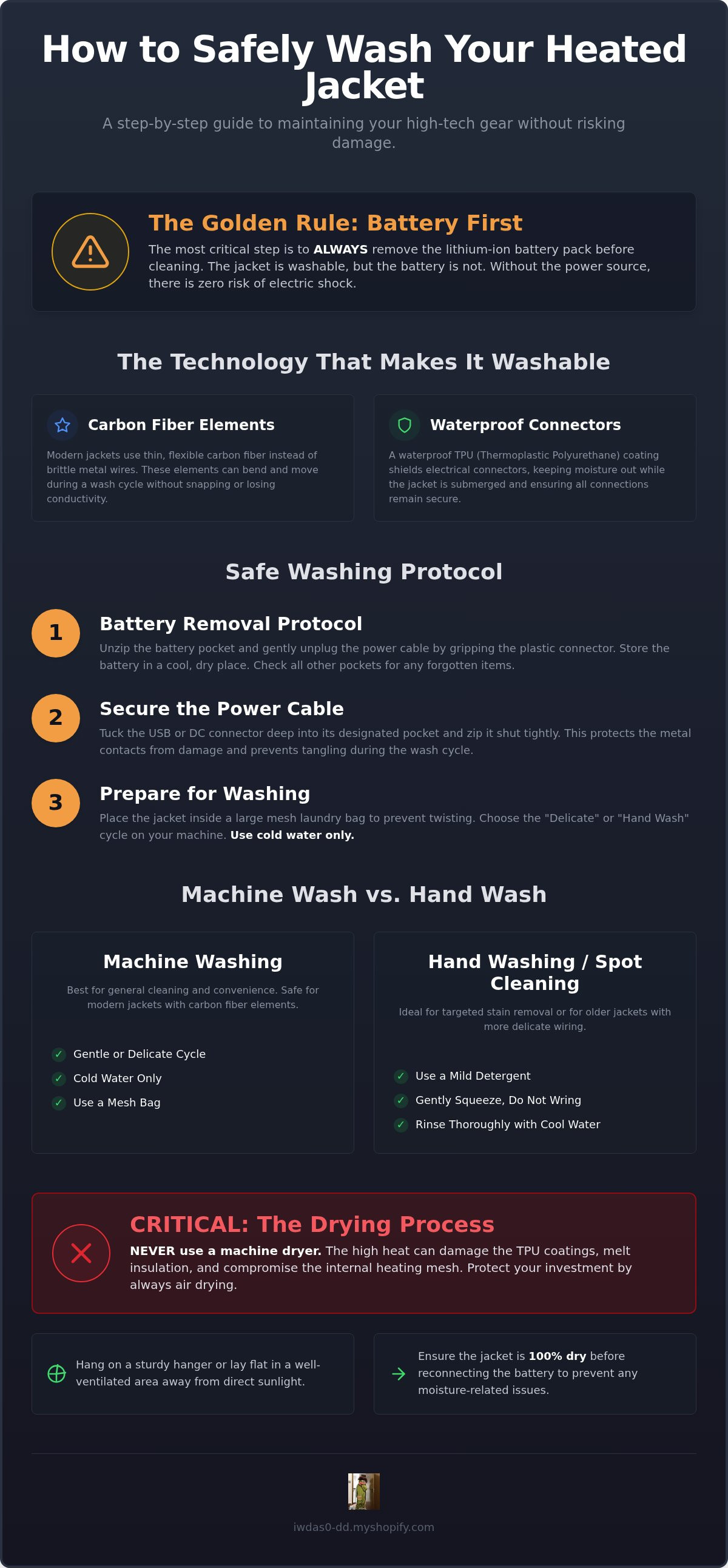
Cleaning your high-tech gear shouldn't feel like a high-stakes science experiment. When you follow a structured approach for how to wash a heated jacket, the process becomes as routine as washing a standard winter parka. The key is in the preparation. By taking five minutes to prep the garment, you ensure the internal carbon fiber remains intact and ready for the next cold snap. Safety in 2026 is all about the "Battery-First" mindset. Before the jacket ever touches water, you must ensure all power sources are completely disconnected and the sensitive connection points are shielded from the mechanical action of the machine.
The Battery Removal Protocol
The most critical step is removing the lithium-ion battery pack. Start by unzipping the battery pocket and gently unplugging the power cable. Don't pull on the wire itself; instead, grip the plastic connector to avoid internal fraying. Once the battery is free, store it in a cool, dry place safely away from the laundry area to prevent accidental splashes. Finally, do a quick sweep of all other pockets. It's easy to forget a smartphone, a set of keys, or a fitness tracker that might be tucked away from your last outdoor excursion.
After the battery is out, locate the power cable again. Tuck the USB or DC connector deep into its designated pocket and zip it shut tightly. This protects the metal contact points from banging against the washing machine drum, which can cause micro-cracks in the housing. Keeping the cable zipped away also ensures it doesn't get tangled with other garments or the jacket's own lining during the spin cycle.
Setting Up the Washing Machine
For the best results, place your jacket inside a large mesh laundry bag. This acts as a protective cocoon, preventing the sleeves or internal wires from twisting excessively during agitation. When you're ready to start the wash, select the "Delicate" or "Hand Wash" cycle. These settings use a slower spin speed, which reduces the centrifugal force applied to the heating elements. Use cold water only. High temperatures can damage the TPU coatings that keep your electronics waterproof.
Your choice of detergent matters just as much as the machine settings. Opt for a mild, liquid detergent and avoid bleach or fabric softeners at all costs. These harsh chemicals can strip away the Durable Water Repellent (DWR) coating on the outer shell and may eventually degrade the internal wiring. If you're currently shopping for a high-quality heated jacket, look for models that feature reinforced cable connection points, as these are built to withstand regular maintenance cycles with ease.
Machine Wash vs. Hand Wash: Which is Better for Your Gear?
Choosing between the washing machine and your kitchen sink often feels like a toss-up. Both methods have their place in your 2026 gear maintenance routine. While machine washing is the standard for a deep clean, hand washing or spot cleaning can extend the life of your high-tech apparel by reducing mechanical stress. Understanding the nuances of how to wash a heated jacket means knowing when to go for a full soak and when a quick wipe-down will suffice.
The Case for Machine Washing
Machine washing is often the most reliable way to ensure an even clean throughout the entire garment. Modern front-loading machines are especially gentle on the internal carbon fiber heating pads. One of the main benefits is the thorough rinsing of detergents. This prevents soap residue from irritating your skin or attracting more dirt. However, the risk of snagging is real if you skip the mesh laundry bag. For a deeper look at how these garments are built to handle the wash, check out The Science of Stay-Warm: A 2026 Guide to Modern Heated Clothing.
The Case for Spot Cleaning
You don't always need to submerge the whole jacket. If you've just got a splash of coffee on the sleeve or some dried mud on the hem, spot cleaning is the smarter choice. Use a damp cloth and a tiny drop of mild soap. Gently dab the stain without soaking the inner lining where the connectors live. This method is the best way to preserve the internal battery connectors from unnecessary moisture exposure. It keeps your jacket looking fresh between major washes without the wear and tear of a full cycle.
Whether you choose a full soak or a quick dab, never twist or squeeze the fabric to get water out. This manual twisting, or "wringing," is the number one cause of heating element failure. It puts extreme tension on the carbon fiber filaments and can snap the delicate connections. Instead, let the water drip out naturally or press the jacket between two towels to absorb excess moisture. Doing this protects the structural integrity of the heating mesh.
So, how often should you actually do this? Most experts recommend a full wash only once or twice a season. If you use your gear daily for outdoor work, you might need to clean it more often. For the casual weekend explorer, once at the end of the winter season before storage is usually plenty. Over-washing can wear down the outer shell's water resistance faster than necessary. Mastering how to wash a heated jacket is about balance. Clean it when it's dirty, but don't overdo it.
Drying and Post-Wash Care: Ensuring Your Jacket Stays Warm
You've successfully navigated the wash cycle, but the most critical phase for your gear's longevity is actually the drying process. While modern 2026 electronics are built for durability, they still have a complicated relationship with heat. Knowing how to wash a heated jacket is only half the battle; you also need a rock-solid strategy for getting it dry without compromising the internal tech. Patience is your best tool here. Rushing the process with high temperatures can lead to permanent damage that no amount of troubleshooting can fix.
The Dangers of the Tumble Dryer
The "No Heat" rule is non-negotiable. High-temperature dryers can actually melt the specialized adhesives used to keep carbon fiber heating pads in place. Beyond the heat, the constant mechanical tumbling can lead to wire fatigue or micro-fractures in the connection points. If you absolutely must use a machine, select the "Air Dry" or "No Heat" setting only. Adding a clean tennis ball to the drum can help fluff up the internal insulation without the need for damaging thermal energy. Most of the time, however, natural air drying is the safest path forward.
When it comes to air drying, the choice between line drying and flat drying matters. A heavy, water-logged jacket can be quite heavy. If you hang it on a thin wire hanger, that weight can pull on the internal heating mesh and potentially stretch the connections. The best practice is to lay the jacket flat on a clean, dry towel. This supports the weight of the garment evenly while it sheds moisture. If you prefer a hanger, use a wide, padded one to distribute the load across the shoulders.
Washing can occasionally dull the Durable Water Repellent (DWR) finish on the outer shell. Since you can't use a hot dryer to "reactivate" this coating as you would with a standard raincoat, consider using a spray-on DWR treatment while the jacket is still slightly damp. This ensures the fabric continues to bead water rather than soaking it up. Once the jacket is 100% dry, especially inside the battery port, perform a "Power On" test. Plug in the battery and run it on high for five minutes to confirm the heat is distributing evenly across all zones.
Proper Storage for the Off-Season
When the winter chill finally fades, how you store your gear is just as important as how you clean it. Never store your jacket with the battery still connected. This can lead to a slow "parasitic" drain that might kill the battery cells over several months. For the best battery health, charge it to between 50 and 80 percent before tucking it away in a cool, dry place. If you're still exploring the world of wearable tech, check out The Ultimate Guide to Choosing Your First Heated Jacket in 2026 for more maintenance tips. Ready for a fresh start? Explore our latest heated jacket designs built for easy care and maximum warmth.
Why Durability Matters: Choosing a High-Quality Heated Jacket
Choosing the right gear is the first step toward a stress-free winter. When you invest in a jacket designed for longevity, you aren't just buying warmth; you're buying peace of mind. High-quality construction means you won't have to second-guess yourself every time the fabric gets a little bit muddy. If you pick a model engineered for real-world use, the stress of how to wash a heated jacket disappears because the garment is built to handle the task. A durable jacket is a "special find" that pays for itself through seasons of reliable performance and easy maintenance.
Checklist for a Washable Heated Jacket
Before you hit the "buy" button in 2026, take a close look at the technical specifications. Not all heated apparel is created equal. Use this quick checklist to ensure your new favorite layer is ready for the laundry room:
- Carbon Fiber Heating Elements: Ensure the product description explicitly mentions carbon fiber. As we discussed earlier, these flexible filaments are far superior to brittle metal wires when it comes to surviving the agitation of a wash cycle.
- Dedicated Zippered Storage: The power cable must have its own zippered pocket. This is your primary defense against mechanical damage to the connector during agitation.
- Machine Washable Certification: Look for this specific claim on the product page. If a manufacturer doesn't mention it, the jacket might be restricted to spot cleaning only.
Maximizing Your Investment
Your choice of voltage system also plays a role in long-term maintenance. Standardized 5V systems often use USB connectors that are very easy to tuck away and protect. While 7.4V systems can offer more intense heat for extreme sub-zero conditions, they sometimes use proprietary pin-style connectors that require a bit more care during the "Battery-First" prep phase. Regardless of the voltage, a high-quality outer shell is your best friend. Jackets with robust, stain-resistant fabrics mean you won't have to perform a full immersion wash as often, which naturally extends the life of the internal electronics.
Finally, look for a reliable warranty that covers the heating elements themselves. This is the ultimate sign of a manufacturer's confidence in their waterproofing and cable reinforcement. At Green Team Express, Llc, we prioritize outdoor utility and durability in every piece we curate. Our battery heated jacket for winter is designed to be a low-maintenance companion for all your adventures. Ready to upgrade your cold-weather kit? Explore our collection of durable, easy-care battery heated jackets for winter and stay warm without the worry.
Ready for Your Next Cold-Weather Adventure?
You now have the full roadmap for maintaining your high-tech gear. Mastering how to wash a heated jacket isn't about complex science; it's about following the simple "Battery-First" protocol and choosing the right drying method. By removing the power source and opting for a gentle, cold-water wash, you keep your investment performing like new. Remember that durability starts at the checkout. Picking a model with carbon fiber elements and reinforced connections makes your maintenance routine much easier.
At Green Team Express, Llc, we've done the hard work of searching for you. Our selection is curated for extreme durability and features machine-washable carbon fiber tech. Plus, we offer free shipping on all winter gear to get you back outside faster. Shop Durable Battery Heated Jackets for Winter and embrace the cold with total confidence. Your fresh, warm jacket is ready for the next snowy getaway.
Frequently Asked Questions
Can I put my heated jacket in the dryer?
You should avoid using a standard heated dryer cycle at all costs. High temperatures can melt the internal adhesives and damage the carbon fiber heating elements. If you must use a dryer, only select the "Air Dry" or "No Heat" setting. Adding a clean tennis ball helps maintain the jacket's loft without using dangerous thermal energy. Most manufacturers recommend laying the garment flat to dry naturally for the best results.
What happens if I forget to remove the battery before washing?
Forgetting the battery is a serious mistake that can lead to a short circuit or permanent cell damage. If this happens, immediately remove the battery and let both the jacket and the power pack air dry for at least 48 hours. Don't attempt to turn the jacket on until you're certain every internal component is moisture-free. While many connectors are waterproof, the battery itself is not designed for submersion.
Do I need special detergent for heated clothing?
You don't need a specialized "tech wash" detergent, but a mild, liquid soap is essential. Avoid any products that contain bleach, heavy fragrances, or dyes. These harsh chemicals can strip the waterproof coating from the outer shell and potentially corrode the internal wiring over time. Stick to a simple, clear detergent to keep your gear clean and the electronics safe through many winter seasons in 2026.
Is it better to hand wash or machine wash a heated vest?
Machine washing on a gentle cycle is actually the preferred method for most modern models. Using a mesh laundry bag prevents the vest from twisting or snagging on the agitator. Hand washing is a great alternative if you're worried about mechanical stress, but you must never wring the fabric. Learning how to wash a heated jacket or vest correctly ensures you don't snap the delicate carbon fiber filaments inside.
Can I dry clean a heated jacket?
No, you should never dry clean a heated jacket. The harsh chemical solvents used in the dry cleaning process can dissolve the protective TPU coatings on the wiring and damage the internal insulation. These chemicals are far more aggressive than water and soap. Stick to home laundering using the gentle cycle or spot cleaning methods. This preserves the structural integrity of the heating system and keeps your warranty intact.
How long does a heated jacket take to air dry?
A heated jacket typically takes between 24 and 48 hours to air dry completely. The thick insulation and internal heating pads tend to hold onto moisture longer than standard apparel. It's vital to wait until the garment is 100% dry, especially around the battery connection port, before plugging in the power source. Speeding up the process with a hair dryer is not recommended as targeted heat can damage electronics.
Why did my heated jacket stop working after I washed it?
The most common reason a jacket stops working is residual moisture in the connection port. If the jacket is completely dry and still won't power up, a wire may have snapped during a high-speed spin cycle or from manual wringing. Always check your battery charge first. If you've followed the guide on how to wash a heated jacket and it still fails, the internal mesh may have suffered mechanical fatigue.
Can I use fabric softener on my heated jacket?
You should never use fabric softener when cleaning your heated apparel. Softeners leave a waxy residue on the fabric that can interfere with the jacket's breathability and damage the Durable Water Repellent (DWR) finish. More importantly, these chemicals can build up on the electrical connectors and cause poor performance or connectivity issues. Stick to a mild liquid detergent to ensure your jacket stays functional and the heating elements remain efficient.