
That satisfying brown residue you find inside a used ear candle isn't actually the wax from your head; it's mostly just burnt fabric and candle wax. It's a startling realization for anyone who has turned to "holistic" methods to fix muffled hearing or that annoying sense of fullness. We've all been there, searching for a way to clear our ears without the risk of a Q-tip or a trip to the clinic. When you look at the debate of ear candling vs water flusher, it's easy to get lost in the marketing claims versus the medical reality.
You shouldn't have to choose between comfort and safety. We promise to show you the scientific truth behind ear care myths and why water flushing is the preferred choice for medical professionals. This article explores the dangers the FDA warns about, the reality of the "chimney effect," and how a gentle irrigation system can provide the clear hearing you're looking for. By the end, you'll know how to build a safe, repeatable home routine that protects your eardrums while keeping your ears feeling fresh and clear.
Key Takeaways
- Uncover the truth about the "chimney effect" and why the residue left in ear candles isn't what it seems.
- See how the debate of ear candling vs water flusher settles on safety, with irrigation providing a medically backed path to clear hearing.
- Learn why using body-temperature water is the secret to a comfortable, dizzy-free ear cleaning routine at home.
- Master the safety protocols for identifying earwax impaction and knowing exactly when it's time to see a professional.
- Explore the benefits of modern electronic flushing systems that provide a more consistent and effective clean than manual bulb syringes.
Ear Candling vs. Water Flusher: The Great Ear Care Debate
Most of us grew up thinking a cotton swab was the gold standard for ear hygiene. We now know that pushing a Q-tip into your ear canal is often like using a plunger in reverse; it just packs the wax deeper against your eardrum. This realization has sparked a massive search for alternatives that don't involve the risk of hearing damage. In 2026, the conversation has shifted toward finding methods that actually work. This brings us to the center of the modern debate: ear candling vs water flusher. One is a trendy, social media favorite, while the other is a clinical approach brought into the comfort of your home.
The year 2026 is becoming the year of the "informed ear." People are moving away from blind habit and toward scientific hygiene. We're finally looking at the data rather than just following old routines. Whether you're dealing with muffled hearing or that annoying "full" sensation, choosing the right tool is the first step toward relief.
The Appeal of Holistic Ear Care
It's easy to see why people are drawn to "natural" remedies like Ear Candling, also known as ear coning. There's a certain mystery and relaxation to the process. It feels like a spa treatment rather than a chore. The psychological satisfaction is the biggest selling point. After the process is over, users often cut open the hollow tube to find a dark, waxy residue inside. It looks like "proof" that the candle pulled impurities from deep within the head.
Marketing for these candles often goes beyond simple wax removal. You'll hear claims that they can clear sinuses, cure chronic headaches, or even "purify the blood." These are bold promises for a piece of fabric dipped in paraffin. While the visual of the residue is compelling, the science behind how that gunk gets there is much less magical than it appears.
The Medical Shift Toward Irrigation
While the holistic world focuses on candles, the medical community has relied on a much simpler element for decades: water. Doctors have used ear irrigation in clinics to safely dislodge stubborn cerumen without using sharp tools or heat. It's a method grounded in gentle pressure and fluid dynamics rather than myths. The real revolution happened when this clinical technology was condensed into accessible home kits.
The transition from expensive clinic visits to using a dedicated Ear Wax Water Flusher at home has changed the game for personal care. These systems use a controlled stream to get behind the wax and float it out naturally. It's efficient, repeatable, and doesn't involve an open flame near your hair. If you're curious about the best way to start this routine, check out our Safe Home Ear Irrigation: 2026 Wax Removal Guide for a deeper dive into the process. We're seeing a clear move toward these water-based systems because they offer professional results without the professional price tag.
The Science of Ear Candling: Why the "Chimney Effect" is a Myth
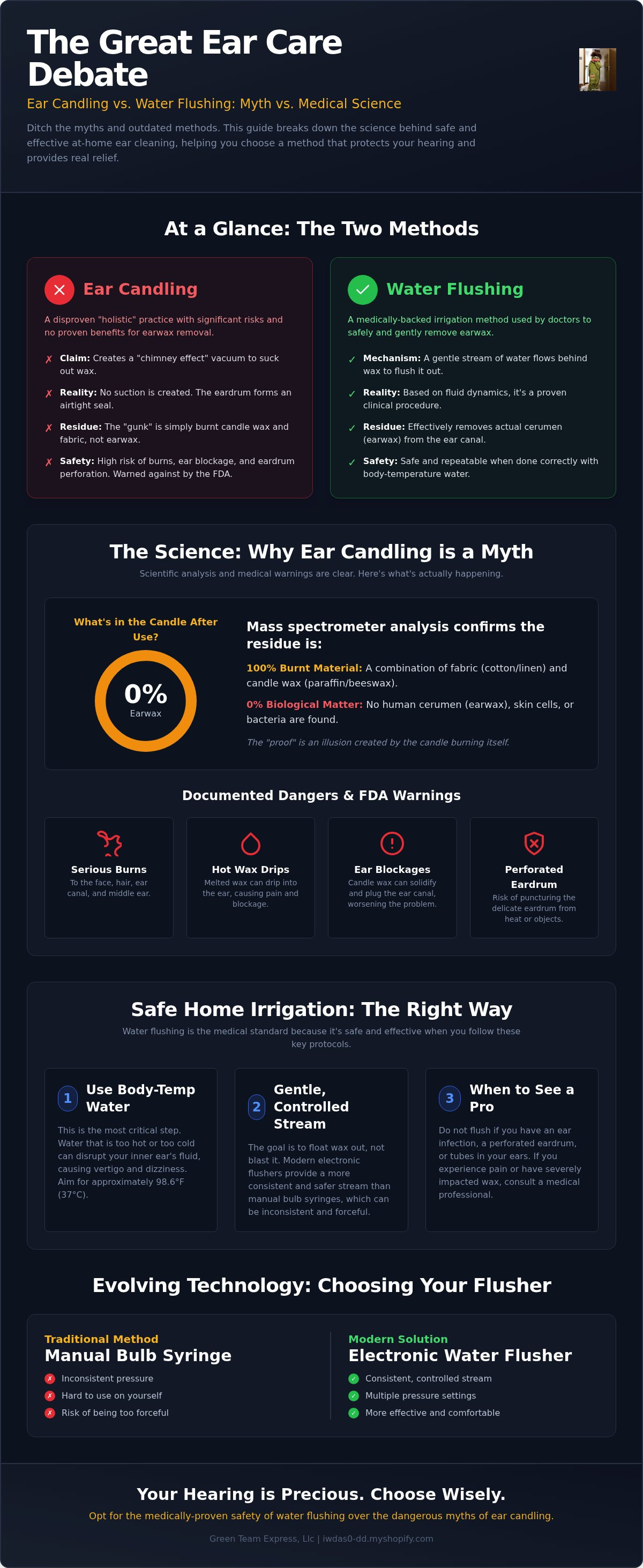
Ear candles are remarkably simple objects. They're typically hollow tubes made of fabric, like cotton or linen, soaked in paraffin or beeswax. The theory behind them sounds plausible on the surface. Proponents claim that lighting the top of the candle creates a "chimney effect," a gentle vacuum that draws wax and impurities out of the ear canal. However, when we look at the physics of ear candling vs water flusher, the vacuum theory quickly falls apart. Science shows that the air pressure inside the tube remains unchanged during the entire burn.
The most damning evidence comes from mass spectrometer results. Scientists have analyzed that dark, waxy residue found inside the candle after a session. Every time, the results are the same. The "gunk" consists of burnt fabric and candle wax, not human earwax. There's no biological material in the tube. Additionally, temperature checks show that the candle doesn't generate enough heat to melt earwax safely. If the candle were hot enough to liquefy deep wax, it would cause severe burns to the delicate skin of your ear canal first.
Debunking the Vacuum Theory
The biggest flaw in the suction theory is your own anatomy. The eardrum acts as a solid, airtight physical barrier between the outer ear and the middle ear. Suction requires a closed system to work, but the ear canal is open to the air at one end and blocked by the eardrum at the other. Tympanometric measurements, which measure pressure in the ear, have proven that zero negative pressure is created during candling. Ear coning is a heat-based myth with no proven suction capacity.
The Dangerous Reality of Burns and Ash
The risks involved with this method are far from theoretical. There are numerous FDA warnings on ear candles because of reported injuries. Hot wax can easily drip down the hollow tube and land directly on the eardrum or the sensitive ear canal. This can lead to serious burns or even a perforated eardrum. Beyond the heat, fine ash deposits from the burnt fabric can settle deep in the ear, potentially leading to secondary infections that are difficult to treat.
There's a strange irony to the process. Instead of pulling wax out, the act of inserting the candle often pushes existing wax deeper. It creates a plug that makes hearing worse than it was before you started. Instead of risking a burn with an open flame, many are switching to a gentle Ear Wax Water Flusher to get the job done safely. It's a much more predictable way to maintain your hearing without the risk of fire or falling ash.
How Water Flushers Work: The Medically Backed Alternative
If you've spent years trying to scoop out wax with cotton swabs, the idea of a water flusher might feel like a major shift. It is actually a medically backed alternative that relies on simple fluid dynamics. Instead of trying to pull wax out with a vacuum that doesn't exist, irrigation uses a gentle stream of liquid to get behind the blockage. The water creates a back-pressure that floats the wax out of the canal naturally. The physics are simple; the results are professional.
Success rates tell a compelling story. While research shows that ear candling has a 0% success rate for actual wax removal, controlled irrigation boasts a success rate of approximately 90%. This is why doctors have used this method for decades. When we look at the debate of ear candling vs water flusher, the clinical choice is obvious. Using body-temperature water is the key to this success. It ensures the wax is softened without shocking the inner ear, which prevents the dizziness often associated with cold water exposure.
The Safety Profile of Controlled Irrigation
The primary danger of traditional tools is the "pushing" problem. Cotton swabs often act like a ramrod, packing wax tighter against the eardrum. An Ear Wax Water Flusher bypasses this entirely. It uses specialized tips designed to direct water along the sides of the ear canal rather than straight at the delicate eardrum. This lateral flow is what makes home irrigation so effective. It dislodges the wax from the skin so it can be flushed away.
Moisture management is the final step in a safe routine. Modern kits are designed to be used with ease, but it's important to tilt your head and dry the outer ear properly afterward. This prevents the trapped moisture that can sometimes lead to "swimmer’s ear." To understand how these devices have evolved into the tools we use today, take a look at Why Electric Ear Wax Removal is the Modern Choice: Myths vs. Reality (2026).
Comparing the Two Methods Directly
When we weigh the merits of ear candling vs water flusher, the contrast is stark across every category that matters to your health. Here is how they stack up:
- Safety: Candling carries a high risk of burns and eardrum perforation; water flushing is a low-risk, controlled process.
- Efficacy: Candling provides zero wax removal; water flushing is highly effective at clearing impactions.
- Expert Approval: Candling is explicitly disapproved by the FDA; water flushing is the standard practice in clinics worldwide.
Choosing the right method means choosing a routine that is repeatable and safe. Water-based systems provide a level of reliability that fire-based "remedies" simply cannot match. It’s about moving away from guesswork and toward a solution that works every single time.
Safety Protocols: When to Flush and When to Stop
Knowing when to start your ear care routine is just as important as knowing when to stop. Earwax impaction usually signals its presence through a few specific symptoms. You might notice a persistent feeling of fullness, a dull ache, or muffled hearing that feels like you're wearing an invisible earplug. While the choice between ear candling vs water flusher often comes down to efficacy, the safety protocols for irrigation are what make it a reliable home solution. However, there is one golden rule: never use a water flusher if you suspect a perforated eardrum. If you've ever experienced a sharp pain followed by fluid drainage, skip the home care and head straight to a professional.
Who Should Avoid Home Ear Cleaning?
Home irrigation is a fantastic tool for most people, but it isn't for everyone. Certain medical histories make DIY cleaning a risk. If you have ear tubes, have had recent ear surgery, or are currently dealing with an active ear infection, you should put the tools down. Active infections often involve redness, swelling, or discharge, which require medical intervention rather than a flush. For a deeper look at which devices might suit your specific needs, check out The Best Ear Wax Extraction Tools of 2026: A Safety-First Comparison. When in doubt, consulting an otolaryngologist is the smartest move you can make for your hearing.
The "Body Temperature" Secret
The most common mistake people make with irrigation is using water that is too cold or too hot. Your inner ear is incredibly sensitive to temperature changes. When water hits the canal at the wrong temperature, it can trigger the caloric reflex. This causes immediate, intense vertigo or dizziness. To avoid this, always use water that is approximately 98.6 degrees Fahrenheit. A simple way to test this is by using the inside of your wrist, just like you would for a baby's bottle. It should feel neutral, neither hot nor cold. Using gentle, consistent pressure is the final piece of the puzzle. You want to float the wax out, not blast it.
Post-flush care is the final step in maintaining healthy ears. Once the wax is gone, you must dry the ear canal thoroughly. Bacteria love warm, damp environments; leaving moisture behind can lead to painful infections. Tilt your head to the side to let gravity do the work, then gently pat the outer ear with a clean towel. Choosing between ear candling vs water flusher means prioritizing your long-term health over temporary social media trends. If you're ready to experience clear hearing with a professional-grade tool, you can shop our Ear Wax Water Flusher to start your safe home routine today.
Modern Solutions: Choosing the Right Ear Wax Water Flusher
Finding the right tool is the final step in taking control of your ear health. While manual bulb syringes have been around for years, they often lack the consistency needed for deep cleaning. Electronic systems have become the preferred choice in 2026 because they take the guesswork out of the process. When you weigh the options of ear candling vs water flusher, the electronic flusher offers a level of control that ancient "remedies" simply can't match. It’s about moving from a hit-or-miss approach to a reliable, professional-grade routine.
Our own Ear Wax Water Flusher has emerged as a top-rated discovery this year because it prioritizes user safety without sacrificing power. For a more detailed look at specific high-end options, you can read our Cleanse Right Professional Electronic Ear Wax Removal Kit Review: 2026 Guide. Choosing a high-quality kit ensures you aren't just moving wax around, but actually clearing the canal safely and effectively.
Features of an Effective Water Flusher
A quality home irrigation kit should feel like a medical tool, not a toy. Look for devices that include soft, flexible tips. These are essential for preventing accidental scratches to the sensitive skin of the ear canal. Pressure regulation is another non-negotiable feature. Unlike the dangerous "high-pressure" suggestions sometimes found on social media forums, a professional-grade flusher uses a steady, pulsing stream to protect the delicate tympanic membrane. It provides enough force to dislodge wax without the risk of perforation.
Large reservoirs are also a significant advantage. A continuous cleaning cycle allows you to flush out even the most stubborn, impacted wax without having to stop and refill every few seconds. This steady, warm flow is what floats the cerumen out of the ear naturally. It’s a controlled environment that fire-based methods simply cannot provide.
Making the Switch for Better Hearing
The long-term benefits of consistent ear hygiene are hard to ignore. Clear ears mean better balance, improved hearing, and an end to that annoying muffled sensation. When you look at the cost-benefit analysis, the choice becomes even clearer. A professional ear syringing appointment can cost anywhere from $100 to $250 without insurance. A home kit pays for itself after just one or two uses, providing a repeatable solution you can use whenever you feel that "fullness" returning.
The final verdict in the ear candling vs water flusher debate is settled by science. One method relies on fire and myths, while the other uses fluid dynamics and safety-first design. Water flushing is the only logical choice for anyone serious about their ear health. It’s a safe, repeatable, and cost-effective way to ensure you never have to deal with the discomfort of wax buildup again. You get clinical results without the clinical price tag.
Clear Your Path to Better Hearing
Choosing your ear care routine shouldn't be a guessing game. We've explored how the "ancient" mystery of ear candles is just a mix of burnt fabric and paraffin with zero medical benefit. Water irrigation is the clinical standard for a reason. It uses simple physics to float away blockages without the risk of burns or eardrum damage. When you compare ear candling vs water flusher, the choice is science over superstition.
Embrace a method that actually works. Our solution is curated for safety and efficacy; it's a modern alternative to dangerous ear candling trusted by home hygiene enthusiasts nationwide. You can enjoy that light, clear feeling in your ears without the stress of a clinic visit. Take the first step toward a safer hygiene routine today.
Upgrade your ear care with the Ear Wax Water Flusher
Your hearing is precious. Protecting it with the right tools is a great investment for your daily comfort and long-term health.
Frequently Asked Questions
Is ear candling safe for children or adults?
Ear candling is not considered safe for children or adults by medical professionals. The FDA has issued multiple warnings about the practice because of reports involving serious burns, perforated eardrums, and wax blockages. Children are at an even higher risk due to their smaller ear canals and increased sensitivity. When comparing ear candling vs water flusher, the water-based approach is the only one with a proven safety profile for home use.
Does ear candling actually pull wax out of the ear?
No, ear candling does not pull wax out of the ear. The "chimney effect" that supposedly creates a vacuum is a physical myth. Controlled tests using pressure sensors have shown that no suction is generated by the flame. Since the eardrum is a solid barrier, there's no way for a candle to pull anything from the middle ear or sinuses. It simply doesn't have the mechanical power to move cerumen.
What is the "brown stuff" inside an ear candle after use?
The brown residue found inside a used candle is a mixture of burnt fabric and paraffin wax from the candle itself. You can easily prove this by "burning" a candle in a jar without putting it in an ear; the same residue will appear. Analysis has shown this gunk contains no human earwax. It's a clever visual trick that makes users believe the treatment is working when it's actually just debris.
Can a water flusher damage my eardrum?
A water flusher is very safe when used according to the instructions. The key is using gentle pressure and body-temperature water to avoid discomfort. You should never use a flusher if you have a known perforated eardrum or have recently had ear surgery. Modern kits are designed with specialized tips that direct water away from the eardrum, making them a much safer choice in the ear candling vs water flusher debate.
Is it better to use a water flusher or an ear vacuum?
Water flushing is generally better and more effective than home ear vacuums. Clinical studies show that irrigation has a high success rate for removing impacted wax, while most consumer-grade vacuums lack the suction power to move stubborn buildup. Vacuums can also be noisy and irritating to the ear canal. For a reliable clean that mirrors a professional clinic, a controlled water-based system is the superior choice for home hygiene.
How often should I use an ear wax water flusher?
You should only use an ear wax water flusher when you feel the symptoms of wax buildup, such as muffled hearing or a sense of fullness. Most people don't need to clean their ears every day. Your ears naturally migrate wax outward on their own. Using a flusher once every few months is usually enough for those prone to impaction. Over-cleaning can strip away the natural oils that protect your ear canal.
What should I do if my ear feels clogged after flushing?
If your ear feels clogged after flushing, it's often just trapped water or a partially dislodged piece of wax. Try tilting your head to the side and gently pulling on your earlobe to help the water drain out. If the muffled feeling lasts longer than a few hours, you might have a deeper blockage that requires a second gentle flush or a visit to a doctor. Never use a cotton swab to dry the canal.
Can I use tap water in my ear wax water flusher?
It's best to use distilled, sterile, or previously boiled water that has cooled to body temperature. While many people use tap water without issues, using sterile water eliminates the rare risk of infections from microorganisms found in some local water supplies. Always ensure the water is warm, around 98.6 degrees Fahrenheit. This prevents the dizziness that happens when cold water hits the inner ear's balance sensors.