
Have you ever reached for a cotton swab to clear a muffled ear, only to stop because you're terrified of hitting your eardrum? It is a common fear, and for good reason. That annoying "full" feeling in your ear makes it hard to focus, but many traditional ear wax extraction tools like metal picks or cotton buds often push the blockage deeper. You want clear hearing, but you don't want to risk a trip to the doctor for a punctured eardrum.
We agree that home hygiene should be simple and stress-free. You deserve a way to restore your hearing clarity without the anxiety of a DIY medical emergency. This guide discovers the safest and most effective home ear wax extraction tools to keep your hearing clear without the risks of old-fashioned scraping. We have done the research to find solutions that are gentle, reusable, and actually work. It is about finding that perfect balance of safety and utility.
In the following comparison, we look at how modern water-based flushing is replacing risky physical tools as the gold standard for 2026. You will learn how to build a pain-free routine that saves you money and keeps your ears feeling fresh and clear all year long.
Key Takeaways
- Move beyond risky cotton swabs and discover how modern ear wax extraction tools use smarter technology to keep your hearing clear.
- Compare the precision of high-tech camera extractors against traditional mechanical scoops to find the right balance of visibility and control.
- Explore why water-based flushing has become the gold standard for safety by using gentle fluid dynamics instead of physical scraping.
- Identify the must-have features for your home routine, such as adjustable pressure settings and soft, medical-grade silicone tips.
- Learn how to use a premium water flusher to get professional results and a "fresh ear" feeling in just a few simple steps.
Navigating the World of Ear Wax Extraction Tools in 2026
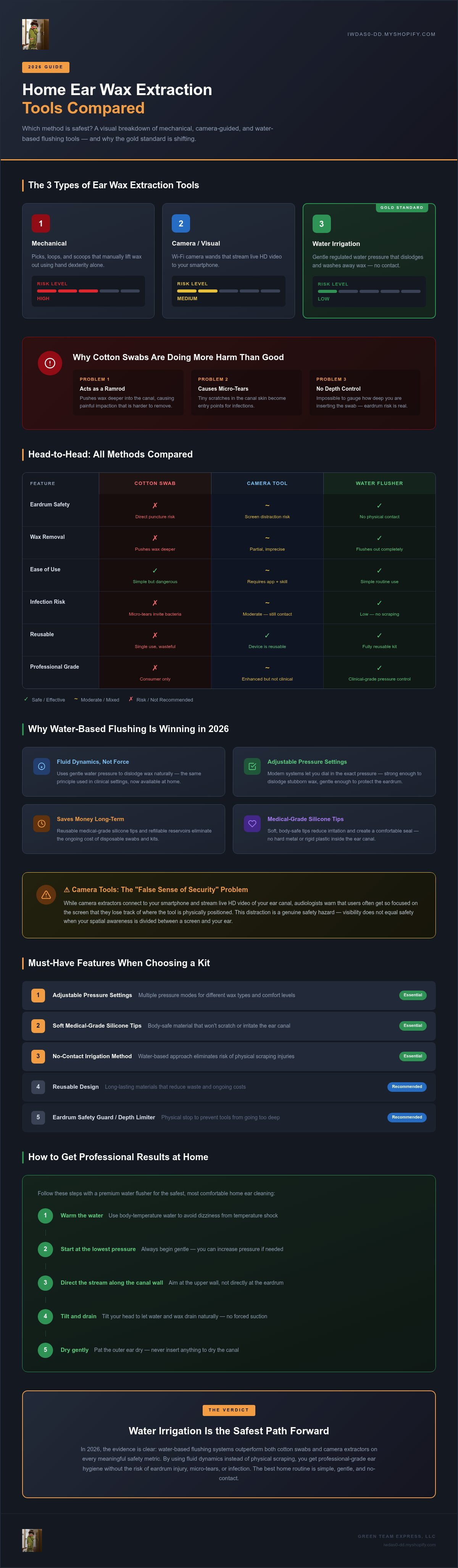
Ear wax extraction tools are specialized devices designed to help you manage cerumen buildup from the comfort of your own home. In 2026, we've seen a massive shift in how people approach this part of their hygiene routine. The days of "blindly" poking around with a cotton swab are fading fast. Instead, modern solutions focus on precision and safety. The ultimate goal is simple: clear the blockage without ever touching your delicate eardrum.
Today, these tools generally fall into three distinct categories:
- Mechanical: Precision-engineered picks and loops that manually lift wax out.
- Visual: High-tech devices equipped with tiny cameras that stream video to your phone, showing you exactly what is happening inside the canal.
- Irrigation: Specialized systems that use gentle water pressure to dislodge and wash away debris.
Choosing the right method depends on your comfort level and the type of buildup you're dealing with. However, the industry is moving toward "no-contact" methods that reduce the risk of accidental injury and provide a more comfortable experience.
The Problem with Traditional Cleaning Methods
For decades, the humble cotton swab was the go-to choice for many. However, we now know that swabs often do more harm than good. They tend to act like a ramrod, pushing wax deeper into the canal and causing painful impaction. This makes the blockage much harder to remove and can even lead to micro-tears in the sensitive skin of your ear canal. These tiny scratches are often the entry point for infections. To understand the foundations of a better approach, check out this Safe Home Ear Irrigation: 2026 Wax Removal Guide. It's a great starting point for anyone looking to ditch the swabs for good and protect their hearing.
The Evolution of Home Ear Care Technology
Home care has come a long way from the basic rubber bulb syringes your parents might have used. We've entered an era where professional-grade features are finally accessible to everyone. Modern electronic flushing systems provide a level of control that was previously only found in a clinical setting. These tools prioritize pressure regulation, ensuring the stream is strong enough to dislodge stubborn wax but gentle enough to protect your eardrum. It's a sophisticated way to handle a daily necessity with a bit of modern wonder. By focusing on fluid dynamics rather than physical scraping, these new systems offer a much more reliable solution for non-medical users who want clear hearing without the discomfort.
Comparing Mechanical Scoops vs. High-Tech Camera Extractors
When you browse for ear wax extraction tools online, you'll likely see two popular options: traditional mechanical scoops and modern camera-enabled wands. Both promise a clear canal, but they operate on very different principles. Mechanical tools rely entirely on your hand-eye coordination and sense of touch. Camera tools, on the other hand, use digital eyes to guide your movements. Choosing between these ear wax extraction tools requires understanding the trade-offs between tactile feedback and digital vision. It feels like a massive upgrade, but visibility doesn't always equal safety.
Mechanical Picks and Scoops: A Risky Choice?
Mechanical scoops are often made from stainless steel or plastic, sometimes featuring a soft silicone tip. While they're affordable and simple, they require a high level of manual dexterity that most people don't possess when working on their own ears. Audiologists frequently discourage "blind" scraping because it's nearly impossible to judge depth accurately. Without a clear view, you're essentially fishing in the dark. Attempting to scrape away wax with an unguided tool often leads to accidental jabbing that can instantly bruise the canal or tear the eardrum.
Many of these kits come in multi-piece sets with different loop shapes. While they look professional, the lack of a safety guard means there is nothing to stop the tool from going too deep if your hand slips. It is a high-stakes approach to a simple hygiene task that often results in more irritation than relief.
Camera Tools: Visibility vs. Safety
High-tech camera extractors have gained popularity because they connect to your smartphone via Wi-Fi. You can see a live stream of your ear canal in high definition. It's fascinating to watch, but it creates a "false sense of security." Users often get so focused on the screen that they lose track of where the tool is actually positioned in physical space. This distraction is a genuine safety concern. Even with a camera, you are still making physical contact with sensitive canal walls using a hard tip.
The hand-eye coordination required for camera tools is surprisingly difficult. Moving left on the screen often means moving right in your ear. One wrong twitch while distracted by the video feed can cause a sharp edge to scrape against the canal. If you're looking for a simpler way to keep your ears clear, a water-based system might be the more intuitive solution for your routine. Physical tools, even with cameras, remain invasive. They carry a risk that many home users find unnecessary when safer irrigation methods exist.
The Rise of Water-Based Flushing Systems: Why Safety Wins
If physical scraping feels like a gamble, water-based irrigation is the sure bet. It represents a fundamental shift from force to fluid. Instead of using solid ear wax extraction tools to hook or scoop, irrigation uses the power of fluid dynamics to do the heavy lifting. This method is often called the "vortex" effect. The water doesn't just hit the wax; it flows around it. It slips into the tiny gaps between the canal wall and the blockage, creating a gentle outward pressure. This process naturally carries debris toward the outer ear without any direct contact from a hard instrument. It is a much more sophisticated way to handle a daily necessity.
Water is inherently safer than metal or plastic tips. It contours to the unique, winding shape of your ear canal rather than forcing the canal to adapt to a rigid tool. This is a primary reason why many consider electric ear wax removal the modern standard for home care. It replaces the anxiety of manual "jabbing" with a predictable, controlled stream that protects your hearing while delivering a deep clean.
How Irrigation Mimics Professional Office Visits
Professional clinics have used manual "Elephant Ear" sprayers for years to clear stubborn blockages. Modern electronic flushers bring this same level of efficacy into your own bathroom. These devices focus on three key pillars: pressure, temperature, and tip design. Using lukewarm water is essential. If the water is too cold or too hot, it can trigger a dizzy sensation known as the caloric reflex. Modern kits also feature soft, disposable silicone tips. These are specifically shaped to prevent deep insertion, acting as a built-in safety guard that keeps the tool a safe distance from your eardrum.
Benefits of the "Hands-Off" Extraction Approach
The biggest advantage of irrigation is its "hands-off" nature. You aren't scraping the sensitive skin of the canal, which significantly reduces the risk of micro-tears or infections. This method is incredibly versatile for different users. Whether you have soft, wet wax or hard, dry cerumen, the constant flow of water softens the material and washes it away. It is especially effective for stubborn impactions that traditional ear wax extraction tools might accidentally push deeper. By choosing a water-based approach, you're opting for a routine that values long-term ear health and a pain-free experience.
Selecting the Right Kit for Your Ear Hygiene Routine
Selecting the right kit for your ear hygiene routine is about more than just looking at the price tag. It is about finding a tool that respects your anatomy while providing enough power to get the job done. Not all ear wax extraction tools are created equal. Some focus on flashy tech, while others prioritize the core mechanics of safety and comfort. You want a device that feels like a natural extension of your hand, allowing you to focus on the sensation in your ear rather than struggling with the controls.
Adjustable pressure settings are a non-negotiable feature. Your ears can be more sensitive on certain days, or you might have a particularly stubborn blockage that requires a bit more flow. Look for a device that offers multiple modes, such as soft, normal, and pulse. This variety lets you customize the experience to your personal comfort level. Additionally, ensure the kit includes high-quality, medical-grade silicone tips. These are soft enough to prevent scratches but durable enough to stay in place during use. The ideal water pressure range for home devices should stay between 8 and 15 PSI to ensure a safe yet effective cleaning experience.
Ergonomics play a massive role in how often you will actually use your new tool. A sleek, one-handed design is essential. It allows you to steady your head or hold a catch basin with your other hand without feeling clumsy. Modern kits should also be rechargeable and waterproof. Being able to rinse the entire unit under the tap makes maintenance a breeze and keeps your hygiene routine truly hygienic.
Key Features to Look For in 2026
In 2026, USB-C has become the universal standard for charging. It is fast, reliable, and means you likely already have a compatible cable lying around. You should also pay attention to the water reservoir capacity. A tank that holds between 200ml and 300ml is usually enough for a full cycle without needing a refill mid-session. Finally, a good kit should always include a splash guard or a specialized catch basin. These small additions prevent water from running down your neck and keep the process mess-free.
Maintenance and Longevity
Hygiene is vital for any tool that enters the ear canal. After every use, empty the reservoir completely and let the device air dry. This simple step prevents bacterial growth and mold. You should also replace the silicone tips every few months, especially if you share the main unit with other family members. Store your electronic tools in a dry, cool place rather than a damp shower stall to protect the internal battery and circuitry. If you are ready to upgrade your home routine, the Ear Wax Water Flusher offers the perfect balance of safety and utility for any user.
Professional Results with the Ear Wax Water Flusher
The Ear Wax Water Flusher represents the peak of home hygiene technology for 2026. It's a premium solution that bridges the gap between basic retail kits and professional clinic equipment. While we've discussed various ear wax extraction tools that involve risky scraping or confusing cameras, this device focuses on a simpler, more natural approach. It's designed for anyone who wants clear hearing without the stress of "blind" cleaning. It's a specialized tool that turns a difficult task into a seamless part of your morning routine.
The beauty of this system lies in its absolute simplicity. You don't need a medical degree to get professional results. Just fill the reservoir with lukewarm water, point the soft silicone tip, and flush. The gentle water pressure does all the work, dislodging stubborn buildup and washing it away into the included catch basin. Each kit comes fully equipped with everything needed for a safe, effective session right out of the box. It's a complete, self-contained system for modern ear care.
Beyond the immediate relief of clearer hearing, this flusher is a smart financial choice. Frequent clinic visits for wax removal can be expensive and time-consuming. By investing in a high-quality home system, you're choosing a cost-saving alternative that pays for itself in just a few uses. It's about taking control of your health with a tool you can trust.
Why the Ear Wax Water Flusher Stands Out
This device strikes the perfect balance between powerful cleaning and gentle delivery. It avoids the harshness of metal picks while providing more consistency than a manual bulb syringe. The user-friendly design takes the guesswork out of hygiene. There are no complicated apps to sync or sharp edges to worry about. It fits perfectly into a "functional lifestyle" approach, where utility and ease of use are the top priorities. It's a reliable companion for anyone who values practicality and a sense of wonder in their daily finds.
Start Your Journey to Clearer Hearing
If you're a first-time user, the secret to a comfortable experience is the water temperature. Always use water that's close to your body temperature to avoid any dizzy sensations. Start on the lowest pressure setting to get a feel for the flow. It's time to move away from outdated, risky ear wax extraction tools that can damage your hearing. Embrace a routine that is as safe as it is effective. We invite you to explore the full collection at Green Team Express, Llc and discover the joy of effortless, pain-free ear hygiene today. Your ears will thank you for the upgrade.
Embrace a Safer Standard for Clearer Hearing
You don't have to settle for muffled hearing or the anxiety of risky DIY methods. The shift toward water-based irrigation is about prioritizing your long-term ear health with smarter technology. Modern ear wax extraction tools have evolved beyond the dangerous metal picks and unguided swabs of the past. By choosing a system that uses gentle fluid dynamics, you can achieve professional results without ever leaving your home.
It's about finding that perfect balance of utility and peace of mind. Our system is top-rated for safety and ease of use, providing professional-grade irrigation at a fraction of the cost of frequent clinic visits. With a secure Shopify checkout and reliable national shipping, upgrading your routine is simple and stress-free. It is a small change that makes a massive difference in how you experience the world around you every single day.
Upgrade your ear care with the Ear Wax Water Flusher
Take the first step toward a clearer, more comfortable routine today. You'll wonder why you didn't make the switch sooner.
Frequently Asked Questions
Is it safe to use ear wax extraction tools at home?
Yes, it's safe as long as you choose the right technology. Irrigation systems are significantly safer than manual picks because they use water to dislodge wax rather than physical force. This avoids direct contact with the eardrum. Always follow the manufacturer instructions and use lukewarm water to prevent dizziness. While some traditional tools carry risks, modern water-based options are designed for non-medical users to manage hygiene safely and effectively.
How often should I use an ear wax water flusher?
Most people only need to use a flusher once every few months or when they feel a sense of fullness. Your ears naturally produce wax to protect the canal, so over-cleaning can lead to dryness or irritation. If you're prone to heavy buildup, a monthly routine might be helpful. It's best to listen to your body and only perform a flush when you notice muffled hearing or discomfort.
Can I use an ear wax cleaner tool if I have a perforated eardrum?
No, you should never use any home extraction tools if you have a known or suspected perforated eardrum. Using water or physical tools in this situation can lead to severe pain, infection, or internal damage. If you have a history of ear surgery or eardrum issues, it's essential to consult a professional before attempting any home hygiene routine. Safety always comes first when dealing with delicate internal structures.
What is the difference between an ear vacuum and a water flusher?
An ear vacuum uses suction to pull debris out, while a water flusher uses a gentle stream to wash wax away. Vacuums are often less effective for hard, impacted wax because they lack the force to break it loose. Water flushers are generally considered the superior choice among home ear wax extraction tools because the liquid can get behind the blockage, softening and dislodging it more reliably.
Does electric ear wax removal hurt?
No, electric ear wax removal should be a completely pain-free experience. When using a water flusher, you'll feel a gentle rushing sensation and some warmth, but there shouldn't be any sharp pain or stinging. If you do feel discomfort, it's usually a sign that the water is too cold or the pressure is too high. Simply adjust your settings to a softer mode for a more relaxing and comfortable session.
What should I do if the wax doesn’t come out after the first try?
Don't panic or reach for a sharp tool if the wax stays put. Stubborn blockages often need to be softened first. You can use ear drops for a day or two to break down the material before trying the water flusher again. Patience is key here. Attempting to force the wax out with physical picks can cause injury, so sticking to the gentle irrigation method is much safer.
Are metal ear picks better than silicone ones?
Silicone tips are almost always the better choice for home users. Metal picks are rigid and can easily scratch the sensitive skin of the ear canal, leading to infections or bleeding. Silicone is flexible and soft, providing a much higher margin of safety. While metal tools might look professional, they require a level of dexterity that's difficult to achieve when you're cleaning your own ears without a clear view.
How do I know if I have a wax blockage or a medical issue?
A wax blockage typically causes a gradual feeling of fullness or muffled hearing. If you experience sudden hearing loss, intense pain, fluid drainage, or high fever, these are signs of a potential medical issue like an infection. Home ear wax extraction tools are perfect for routine maintenance and clearing cerumen, but they aren't a substitute for professional care if you suspect an underlying condition or an injury.